Begin by comparing the shower against a sink in the same bathroom. Strong sink, feeble shower: suspect the head, its restrictor disc, the valve cartridge or the shower arm. Feeble everywhere: look upstream, at a half-shut valve, a tired regulator, a leak, rusted pipe or a problem on the supplier's side. Slow sinks and weak disposals have their own page, help with sink and disposal problems.
Why does only the shower run weak?
Scale clogging the head is the most common reason, followed by a blocked screen where the head meets the arm, a restrictor disc, a worn cartridge, or a tub diverter that does not fully switch over. Bob Vila recommends taking the head off and soaking it in vinegar to dissolve the deposits.
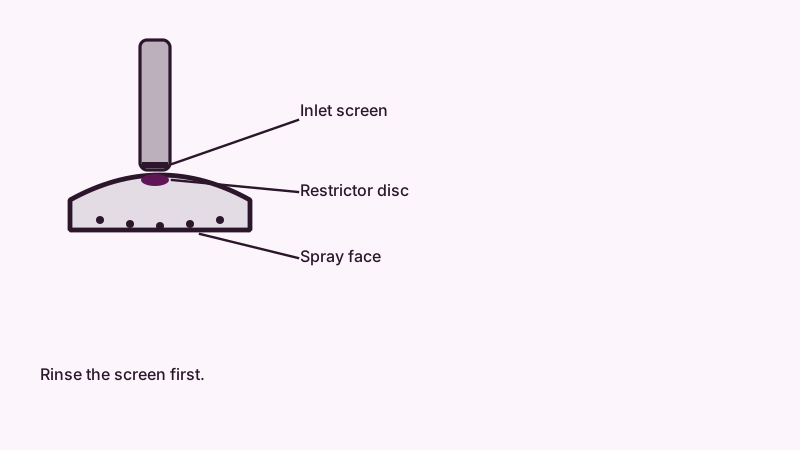
Unscrew the head and peer into the inlet: you will see a tiny mesh screen and sometimes a plastic restrictor disc. Rinse the screen, check for grit, soak the head in vinegar, brush the nozzles, then refit with new thread tape. Better flow with the head off means the head was the culprit. Still weak? The valve cartridge may be worn or silted up, which a plumber can swap. On tub-shower combos, keep an eye on the spout with the shower on; a dribble out of it means the diverter leaks.
Is low pressure just how modern showerheads are built?
Partly. California limits what showerheads can be sold: Title 20 allows 1.8 gallons a minute, with test pressure set at 80 psi, on units built since July 2018. EPA treats 2.5 gpm as the standard and asks WaterSense heads to stay at 2.0 or below. A new head can feel weaker than the one it replaced.
Those limits describe volume, not spray feel. EPA says WaterSense heads must include pressure compensation, which holds flow level as household pressure moves around. A well-made low-flow head still feels brisk, whereas a cheap one dribbles. Drilling out a restrictor may break the product's rating and push up water and heating bills, so shop for a better head instead, and see our notes on showerheads that cope with low pressure.
Does the water heater make the shower weak?
If the cold side is strong and the hot side weak, the water heater or its connections are suspects. Sediment in the tank, a partly closed heater valve, a clogged dip tube or corroded fittings can all reduce hot flow. A shower mixes both, so weak hot water makes the whole shower feel weaker.
Test by running only cold, then only hot, at a sink. If hot runs far weaker, see low hot water pressure for the causes. Cal Water's 2025 report for Hermosa-Redondo lists groundwater at around 502 ppm total hardness on average, and hardness leaves scale in heaters and pipes, so an annual flush is worth the effort. Check that both valves at the heater are fully open. A heater that is failing can also show other signs; the water heater repair page covers them.
Is it the whole house, and how do I measure pressure?
Open several taps together and compare. Weak sinks, toilets and outdoor bibs mean the problem is house-wide. Screw a gauge onto an outdoor bib to read psi. Bob Vila quotes a normal band of roughly 40 to 80, and anything lower, or a needle that wobbles when water flows, signals trouble.
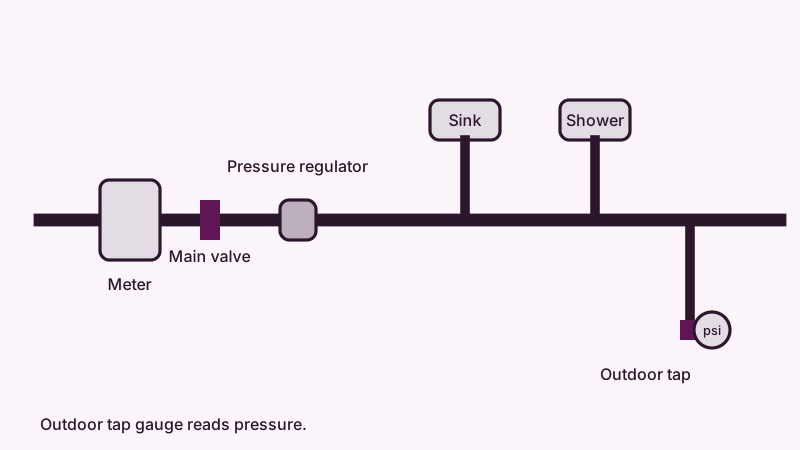
Begin at the main valve, since one left half-closed after earlier work robs the whole house. Next, find the pressure-reducing valve, usually close to the point where the supply line enters. Failing regulators produce low, jumpy or slowly climbing readings. The state code asks for a regulator whenever resting pressure tops 80 psi, and the valve's task is to bring it down to that figure or under. Our guide on finding the regulator helps, and so does reading about how replacement goes.
Could a leak or old pipe be the cause?
Yes. A leak on the way to the house robs the shower of flow, and corroded galvanized pipe narrows the bore. Bob Vila lists leaks and corroded galvanized steel as whole-house causes, and advises checking the meter before adding a booster pump, which can make a leak worse.
Do the meter test: turn off all water, read the meter, wait about two hours and read again. Any change suggests a leak. For old steel lines, a plumber can assess whether targeted replacement or a repipe is called for; see galvanized pipe replacement. A sudden drop, rather than a slow decline, points more to a valve, a break or a supplier issue. A neighbor with the same problem is a clue that it is the utility's side, in which case call your water supplier, named on your bill.
Will a booster pump or a new showerhead fix it?
A fresh showerhead fixes a head problem. A booster pump suits only genuinely weak supply, after leaks, valves and regulators are cleared. Fitting one to a leaking or corroded system wastes money, so have pressure measured before you buy anything.
Often the remedy is inexpensive: clean the head, open a valve, swap a cartridge, reset a regulator. With everything off, a gauge under 40 psi at the main points toward the regulator or the supply; a reading above 80 means a regulator is missing or has failed, and that wears fixtures too. For the wider picture, read low pressure throughout the house.
At what stage does a plumber need to step in?
Bring in a plumber if the entire house is weak, a regulator or valve needs work, a leak may hide behind a wall, old steel pipe is involved, or the cartridge swap is beyond you. Whoever does it should carry a contractor's license from the state.
Check any license on cslb.ca.gov. Expect the plumber to take static and running readings, look over the regulator and main valve, check the heater side too, and leave you a quote on paper before any repair. To arrange it, use the quote form; the home page lists our other services.
Common questions
Why did my shower pressure suddenly drop?
A sudden fall in pressure usually means a blocked showerhead screen, a half-shut valve, a failed cartridge, a leak or an interruption in supply. See whether other taps dropped too. Only the shower: clean the head, test the valve. All of them: inspect the main valve and phone your water supplier to ask about work nearby.
Will cleaning the showerhead fix low pressure?
Often, when scale is the cause. Soak the head in vinegar, brush the nozzles and rinse the inlet screen. Bob Vila recommends this for mineral buildup in hard water. If pressure is still low with the head off, the problem lies deeper in the valve, pipes or supply.
Is it legal to remove the flow restrictor?
Inside the head, the restrictor lets the product satisfy California's sales limit (Title 20, a 1.8 gpm ceiling for newer units). Pulling it may defeat that limit and push up water and energy use. Buying a better-designed head is cleaner.
What water pressure should a house have?
Bob Vila gives about 40 to 80 psi as the usual span, and the code expects a regulator when resting pressure runs above 80. A hose-bib gauge takes a minute to read. If the number falls outside that span, a plumber can adjust or replace the regulator.
Can low shower pressure be caused by the water heater?
Yes, if the hot side is the weak one. Sediment, a partly shut valve or corroded fittings at the heater can choke hot flow, and a mixed shower feels weaker. Test hot-only against cold-only at a sink. Flushing the tank and fully opening both heater valves come first.
Sources used
- Bob Vila, low water pressure causes and fixes, checked November 2026
- U.S. EPA WaterSense, showerheads (2.5 gpm standard, 2.0 gpm WaterSense, pressure compensation)
- California Code of Regulations Title 20, section 1605.3 (showerhead flow limit at 80 psi)
- California Plumbing Code 2025, section 608.2 Excessive Water Pressure (summary)
- Cal Water, 2025 water quality report for Hermosa-Redondo
- Wikipedia, Pressure regulator
Last updated