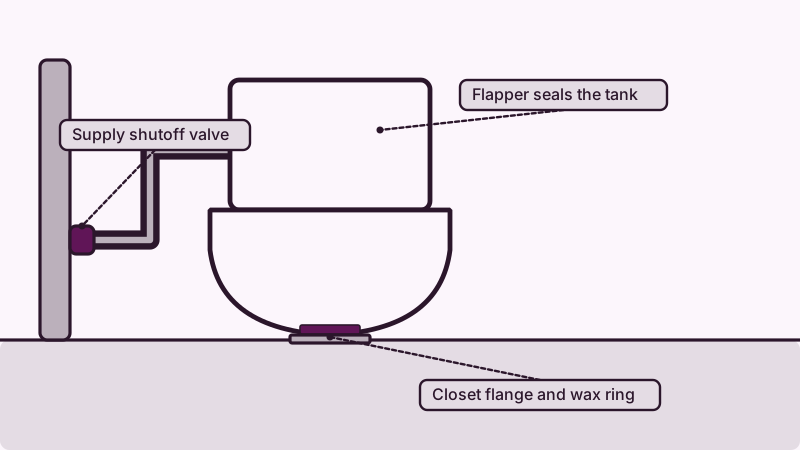
For a straight swap of an old toilet for a new standard one in the same position, published 2026 guides cluster around $350 to $800 all in. The labor line is roughly $150 to $350, the toilet is the remainder, and a stubborn flange, a seized shutoff valve or a rotted floor can push the total past $800. Installing a toilet where none existed, with new supply and drain lines, is a different and much larger job. In Torrance, houses from the postwar tract years often have old shutoff valves and cast iron or galvanized pipework behind them, which is why a visit before the quote matters. This page walks through every cost line, then compares repairing against replacing. If you are still deciding, begin with toilet repair in Torrance.
What should a straight toilet swap cost?
Budget about $350 to $800 for a standard toilet exchanged one for one in a Torrance bathroom. Labor often comes to $150 to $350, since plumbers bill $75 to $150 an hour or a flat price, and the toilet adds $150 to $450 or more depending on the model. A visit with difficult access or a flange repair can pass $450 in labor.
Here is how the pieces usually break down in published 2026 guides:
| Cost line | Typical guide range |
|---|---|
| Labor, same-location swap | $150 to $350 |
| The toilet, standard 1.28 gpf | $150 to $450 and up |
| Haul-away of the old toilet | $50 to $200, sometimes included |
| New shutoff valve | $150 to $350 installed |
| Premium or smart toilet, labor | $300 to $600 |
| New toilet where none existed | $1,000 to $3,500 |
The table is a rough map, and only the quote that follows a visit prices your bathroom.
What do big-box stores charge to put in a toilet?
Store install programs quote a price when you buy the toilet and then send an outside contractor, so the number you see in the aisle is not always the number on the day. Ask what the price covers: shutoff valve, wax ring or new flange, haul-away and the fixing of a floor that is not level. We do not publish a store's prices here, because they change.
A fair comparison is the plumber's labor line plus the toilet price you choose yourself. If a store quote leaves out the old toilet's removal or a worn shutoff valve, add them back before comparing. That is where the gap between a cheap-looking quote and a full one usually sits.
What drives the price up on a toilet swap?
Expect the total to climb with a damaged or low flange, a seized or weeping shutoff, a soft floor under the bowl, a cramped spot or a premium model. Any one adds $100 to several hundred dollars. A flange that sits below the finished floor is common after a tile remodel and takes extra parts to bring it up level.
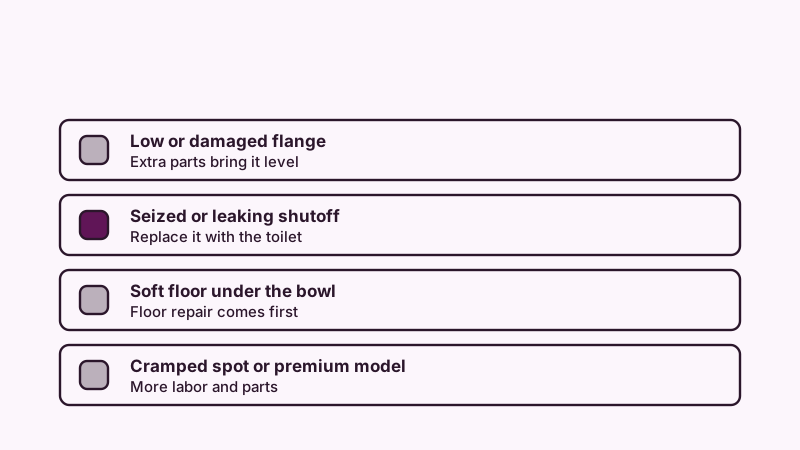
Older Torrance bathrooms also hide corroded supply stubs. If the valve turns with a squeal and then drips, replace it with the toilet, because you will be paying for the plumber's time anyway. For that single job on its own, see toilet repair shut off valve.
Is it cheaper to fix a toilet than to replace it?
Repair wins when a single part has failed, say the flapper, the fill valve, the handle or the wax seal. Those parts run a few dollars to about $30, plus call-out if you do not fit them yourself. Replace if the china has cracked, the bowl blocks constantly or an old high-volume model wastes water.
A quick test: if two separate repairs in a year did not hold, or the china is cracked, move to replacement. The EPA's WaterSense program names the worn flapper as the usual toilet leak, and says moving from an old toilet to a model rated using 1.28 gallons or fewer per flush can trim a home's toilet water use by 20 to 60 percent. The agency puts that at nearly 13,000 gallons a year for a household. Part-by-part fixes are on the pages for flapper repair and flush repair.
What does it cost to stop a toilet leaking?
Three culprits cover nearly every leak, each with its own price. A tired flapper or fill valve is cheapest and often sits inside a basic call-out. Water at the base means the wax seal failed, so the toilet comes up and goes back down. Water at the supply line or the stop valve is a small part and a short job.
Published guides put a simple repair visit near $75 to $200 and a stop valve at $150 to $350. A wax seal reset costs about the labor of a swap minus the toilet. Before you shop for a new one, read the base: a rocking bowl and a damp floor point at the seal, not at the china.
What is the bill for clearing a blocked bowl?
A basic blockage that yields to a plunger or a small hand auger counts as call-out work, among the cheapest lines a plumber has. A bowl that blocks again within days may be hinting at the drain behind it, and that becomes a drain line cost, not a toilet cost.
For the clog itself, the clogged toilet service page explains the visit, and toilet unclogging cost shows the ranges.
Can I change a loose or broken handle myself?
Yes, and a plumber is rarely needed for it. For a side-mount handle, close the stop valve, flush so the tank empties, then undo the nut holding the handle from inside the tank. Its thread is usually reversed, which means that nut loosens when turned clockwise. Unhook the chain, fit the new handle and reattach with a little slack.
Match it by brand and carry the old handle or a photo to the store. If the tank has cracked, or the lever arm was never the issue, book a visit.
Common questions
Is the toilet itself in the quote?
Not always. Some quotes cover labor and leave the toilet to you, others supply one at their price. Ask which applies, the model, its gallons per flush and its bowl shape, because round and elongated bowls take different seats. Compare total installed prices, never a labor line against a full quote.
Do I need city sign-off for a swap?
Rules differ by city. A one-for-one swap in the same position is commonly treated as routine upkeep, but if the job moves the toilet, opens a wall or changes the drain, ask the plumber and the building division of the city. A toilet added where none existed normally needs a permit.
How long does the swap run?
A swap without relocating takes about one to two hours, and the supply is off for part of that. Flange work, a stop valve or a floor patch adds time. Our written quote lists the allowance once the site has been seen. That bathroom is out of use meanwhile.
Will a new toilet fit my bathroom?
Measure the rough-in, meaning the gap measured from the wall surface to the drain's centre point. The usual figure is twelve inches, though some older houses have 10 or 14. Check clearance beside the bowl too. A plumber can confirm it during the visit, before you buy.
Which questions protect me from a surprise bill?
Find out what the total includes, whether the old toilet leaves with the plumber, whether the wax ring and bolts are new, who buys the toilet and who pays if the flange or floor turns out damaged. The last answer heads off the commonest surprise.
For what the work involves beyond the price, see Del Amo Plumbing plumber.
Sources used
- U.S. EPA WaterSense, Residential Toilets
- Published 2026 toilet replacement and installation price guides, read November 2026 (plain label, ranges rounded)
Last updated