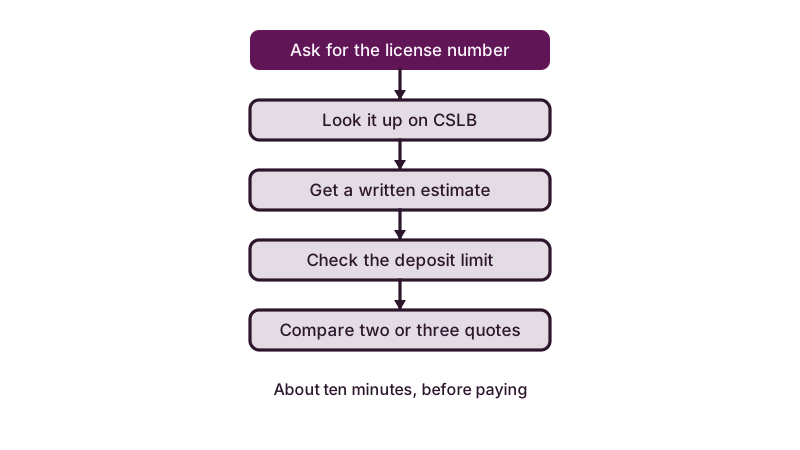
We will not tell you who the best plumber in Torrance is, because nobody has measured that and any site that names a winner is selling something. What you can do is sort candidates with checks that take about ten minutes: ratings read the right way, the state's license record, a written estimate and a few questions. This page walks through them, and the Del Amo Plumbing home page describes how our own visits are arranged.
What does "best rated" actually tell me?
A high rating tells you that customers were happy, usually about the experience rather than the pipe work. It cannot tell you whether the repair holds in five years. Weigh how many reviews there are, how recent they are, what the written comments say, and whether the business replies calmly to complaints. A 4.8 from nine reviews means less than a 4.6 from several hundred.
Read for patterns, not scores:
- Specifics. Reviews that mention the problem, the price quoted and the price paid are worth more than "great service."
- Complaints about price changes. Several accounts of a low phone quote rising on site is a warning.
- Recency. Businesses change hands and staff. Weight the last year over the last decade.
- Replies. Professional answers to bad reviews suggest a business that cares.
Ratings on different platforms are collected differently, so compare two sources rather than one.
Where can I verify a plumber's credentials?
CSLB, the state's contractor regulator, runs a public lookup, and the plumber's license number is all it needs. The rule it enforces starts at a $1,000 job, plus anything that requires a permit or employees. The record you get back shows if the license is live and if plumbing is one of its classes.
AB 2622 raised the threshold from $500 to $1,000 effective January 1, 2025, and it is illegal to split a job into smaller pieces to stay under it. Penalties for contracting without a license at that level include fines and up to six months in jail, according to CSLB's summary. A contractor who dodges the question, or offers only a business name with no number, is a reason to move on.
Compare the business name on the record with the one on the estimate and the van. Furnace and air-conditioning work is filed under a different class, so a plumbing license does not cover heating equipment. Gas appliances sit closer to plumbing, though responsibility and permits are worth a question.
Which terms need to be on paper first?
Anything above $500 in home improvement work has to be covered by a written, readable agreement in California. A solid one names the business and license, spells out the work and materials, sets a payment schedule, says who handles permits, gives an end date and lists any warranty. Changes to price or scope must be in writing and signed by both sides.
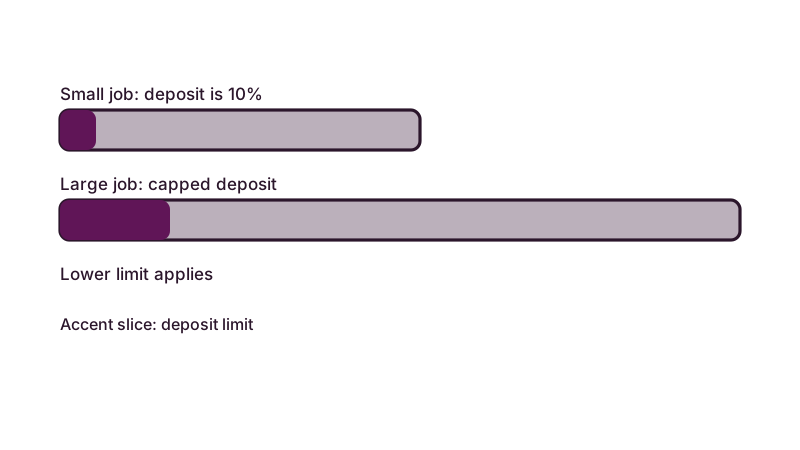
Money terms matter most. Keep any deposit small: the legal limit is the lower of $1,000 and a tenth of the job. After that, you pay as work gets done, never ahead of it, and the paperwork should describe how to cancel. A demand for lots of cash up front, or a price that supposedly expires tonight, is a reason to walk.
Which plumbers are open on Sunday?
Some plumbing firms take emergency calls on Sundays, usually at a premium, while many do not. We answer calls Monday to Friday, so we are not a Sunday option, and we would rather say so than imply otherwise. For a Sunday leak, take the shutoff steps and decide whether the job truly cannot wait until a weekday.
Three questions separate an emergency from an inconvenience: can you stop the water, is there sewage indoors, can you smell gas? A gas smell empties the house. From the sidewalk, phone the utility's emergency number (SoCalGas, 1-800-427-2200) instead of waiting for a plumber. For flooding, the burst pipe guide has its own checklist. For a dripping faucet or a slow drain, Monday is fine.
When you do call a Sunday service, ask for the rate before they come out, including any call-out fee and after-hours multiplier. What to expect is set out on our emergency plumber page.
What should I ask on the phone?
Ask five things: the license number, whether the plumber will give a written estimate after seeing the problem, whether the quote includes permits and cleanup, what warranty applies to parts and labor, and whether anyone subcontracts the work. Good businesses answer plainly. Pressure, vagueness or reluctance to write a price down is itself an answer.
Also ask what a visit costs even if you do not go ahead, since a diagnostic fee is common. Before you agree, the plumber cost page shows the ranges you can expect, and service call costs explains the trip fee.
For water heaters, ask whether the permit and earthquake strapping are included. Water heaters must be braced for earthquakes, and a replacement usually brings in the city for a permit; the permit page has the detail.
Common questions
Should I just accept the lowest price?
Not automatically. A very low number can leave out permits, cleanup, parts or a warranty, or rise once work begins. Compare the same scope across two or three written quotes, and ask what is not included. A fair price you understand beats a bargain with vague terms.
Should I check reviews or the license first?
License first. A review can be curated, but a license record is public and shows status and classification. Then use reviews to learn how the business treats customers. If either one raises doubts, ask the business to explain rather than assuming the worst.
What about a plumber who knocks on my door?
Be cautious. Door-to-door sellers after a storm or a water main flush often press for quick decisions and deposits. Ask for the license number, check it, get a written estimate and do not pay a large deposit. You have the right to cancel certain home improvement contracts, and the contract must say so.
Do you list the highest rated plumbers?
No. We do not rank or rate businesses, and any list claiming to name the top few deserves the same scrutiny as a rating. What we do is simpler: use the quote page to explain the job, then expect a local plumber to come look and quote. Run the checks above on whoever arrives.
Does a plumber handle furnace trouble?
A water heater, yes. A furnace or air-conditioner usually belongs to a heating and cooling contractor holding that class of license. Gas piping is plumbing work that needs the right permit, so ask who is responsible for which part of the job.
Sources used
Last updated