Yes, a pipe that is spraying or pouring is an emergency, because every minute adds water damage to floors, drywall and the rooms below. Close the valve first, phone second. Below: the shutoff, the repair visit, the paperwork, the bills. It sits within leaks and burst pipes. Ring the header number and a Torrance-area plumber gets lined up for a visit.
Is a burst pipe considered an emergency?
Yes. A burst moves water at full house pressure, so you are losing gallons every minute, not drops. Spraying water, a ceiling that is sagging, or any wet area near outlets calls for action now. A brown stain that has stopped spreading can hold until Monday morning. Whichever it is, the water supply is the first thing to close.
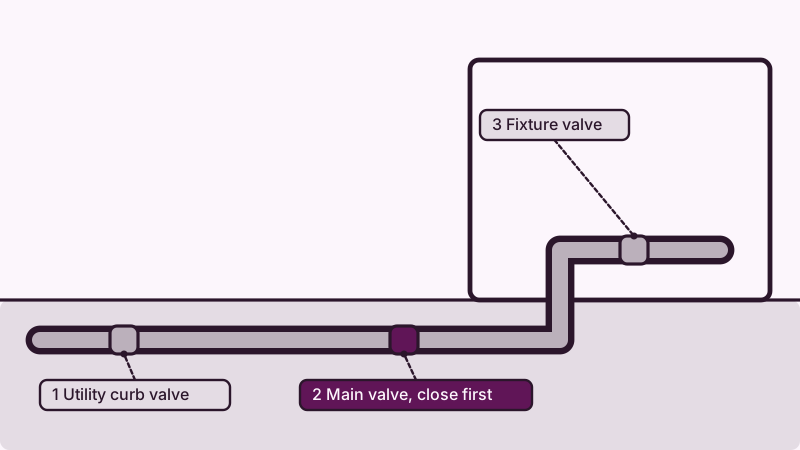
Closing it in a typical South Bay house goes like this:
- Look for the main valve near the front hose bib, along the garage wall, or beside the water heater. In postwar tract houses this is often a round-handled gate valve, crusty with age. Rotate it clockwise by hand, slowly, because a seized stem can snap off.
- Nothing turns? Over at the curb sits the utility's valve under a lid, worked with a meter key. It is the utility's equipment, so skip the pipe wrench.
- Crack a faucet on the second floor and another in the garage sink, letting the line drain down.
- Flip the breaker for a drenched room if the panel is dry and no standing water lies between you and it.
- If the broken line feeds the water heater, switch the heater to pilot or off so the tank does not heat dry.
Take photos of the damage before any cleanup, because the insurer will want them.
Can a plumber fix a burst water pipe?
Yes. Out comes the failed stretch, in goes new pipe, or a fresh run replaces the whole line when the old metal is too worn to patch. Pipe in a garage or crawlspace is often fixed the same day. Pipe inside a slab or behind tile takes longer because the finish has to be opened to reach it.
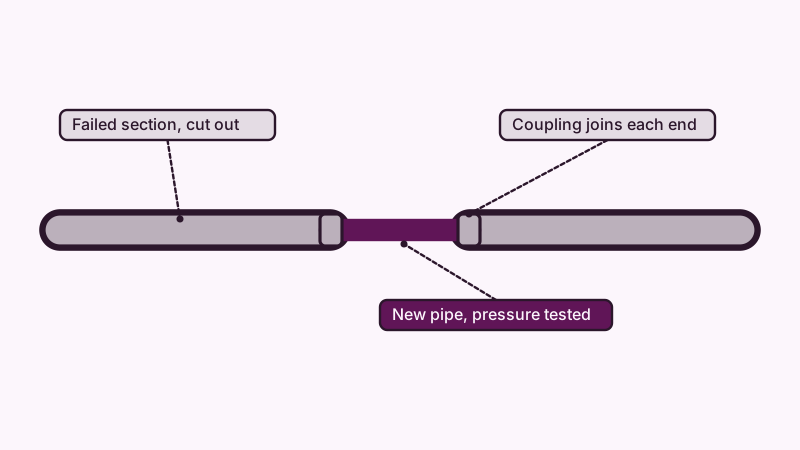
On site, the sequence goes:
- Find it. An open burst is obvious. A hidden one calls for a moisture meter or acoustic listening so the wall is cut once.
- Isolate the branch with a local valve, leaving other fixtures working.
- Replace the section. Copper gets a press fitting or sweated coupling, PEX a crimp ring. Rusted galvanized rarely accepts a patch, and the plumber may say the neighboring pipe will go next. That is the moment to read about when a house is better off repiped.
- Pressure test and watch for drips before anything is covered.
- Leave the finishing to others. Drywall, paint and floor drying are separate trades.
Can I tape up a leaky pipe?
Tape slows a seep for an hour or two, and that is all it does. Self-fusing silicone wrap, a rubber pad under a hose clamp, or a bolt-on repair sleeve can calm a pinhole or hairline split along a straight section, water off. A true burst stays a burst, and these only buy an afternoon.
Skip the temporary fix when:
- the split runs along a seam in old, brittle pipe, since the metal beside it is thin and cracks further under a clamp;
- the leak sits at a gas fitting or a water heater connector;
- the pipe lies beneath the slab, out of reach regardless.
The slow, small cases have their own walkthrough in repairing a pinhole in copper.
Are renters responsible if pipes burst?
Usually the landlord pays to repair the pipe, and the tenant's job is to report it quickly. Civil Code section 1941.1 names working plumbing is one of the standards a rental must meet to count as habitable in California, which puts a failed supply line on the owner. A tenant can owe for harm they caused, and carries the risk on their own belongings unless they hold renter's insurance.
As a tenant: close the water if you can, report it to the landlord in writing (a text counts, so keep it), and photograph the damage. If nobody answers and water is still flowing, you may call a plumber to stop it and pass on the invoice. Read the lease for any after-hours calling rule. This is general information, and a tenants' rights group or attorney can address a real dispute.
Will insurance cover a burst water pipe?
Often for the sudden damage; less certain for the broken pipe. Standard homeowner policies commonly pay for water damage that follows a sudden, accidental burst, while excluding slow leaks, rust and wear. Your own policy wording decides, so read its water section and phone the insurer before large repairs, without delaying the shutoff.
To help a claim, hold on to the broken pipe section, keep each receipt, and film the damage before drying starts. Insurers expect you to limit further harm, which means stopping the water and drying out. A break under the slab is frequently treated differently from one inside a wall, so ask that exact question.
How much will the repair run?
Where the pipe runs decides most of it. Cost guides we checked put rush plumbing between $150 and $300 per hour, plus a trip charge near $75 to $250, and both cover labor alone. Wall demolition, long replacement runs and slab work raise the final figure.
What swings the number:
- Access. An exposed garage line takes about an hour. A line inside a tiled shower wall adds demolition.
- Pipe condition. Brittle neighbors may lead the plumber to recommend a longer replacement.
- Hour of the call. Nights and weekends carry a higher rate.
- Water damage. Drying out the structure is its own invoice.
Buried lines have their own table in slab leak pricing. No figure above is firm until a plumber has seen the pipe in person. For your own job, send it through the quote form.
What makes a pipe burst around Torrance?
Hard freezes are uncommon near the coast, so most local bursts trace back to something else. Thin walls in aging copper, galvanized steel rusted from the inside, and badly seated fittings lead the list. High street pressure speeds the wear. Shifting soil, roots, and a nail driven into a wall during a remodel also do it, and each slam of a fast-closing valve adds strain.
On the temperature question: water turns to ice at 32 degrees Fahrenheit, and pipes tend to split where an ice plug has formed, not where the ice sits. Hillside and inland houses face more risk than the beach cities, and exposed hose bibs and attic lines go first.
Common questions
How can I tell a pipe broke inside the wall?
Look for a damp or warm patch, blistered paint, hissing with every fixture off, and weak taps. Then do the meter test. With everything off, watch the small dial for a few minutes. Movement means water is escaping somewhere. Further checks are in spotting a burst pipe.
How much water does a burst waste?
EPA WaterSense puts the household figure at more than 9,300 gallons yearly from everyday leaks, the small kind. A burst can match that within hours. Hence the main valve before photos, calls or mopping, and hence the shock when an unnoticed break reaches the bill.
Can a burst sprinkler or yard pipe wait until morning?
Usually, once the sprinkler valve or main is shut. A broken sprinkler line is a watering nuisance, not a flood risk, unless the water runs toward a wall or the garage. Close the supply, look for pooling along the foundation, then book an ordinary weekday repair and skip the night-call rate.
What should I ask the plumber first?
Ask what the visit fee covers, whether the job is billed hourly or flat, if a permit is involved, and what surprises are likely once the wall opens. A good answer names a plan and a range before anything is cut. Also ask who repairs the drywall afterward, since plumbers normally do not.
More services are listed on plumber in Torrance.
Sources used
- EPA WaterSense, Fix a Leak Week
- Published hourly and call-out prices of plumbing cost guides, checked November 2026
Last updated