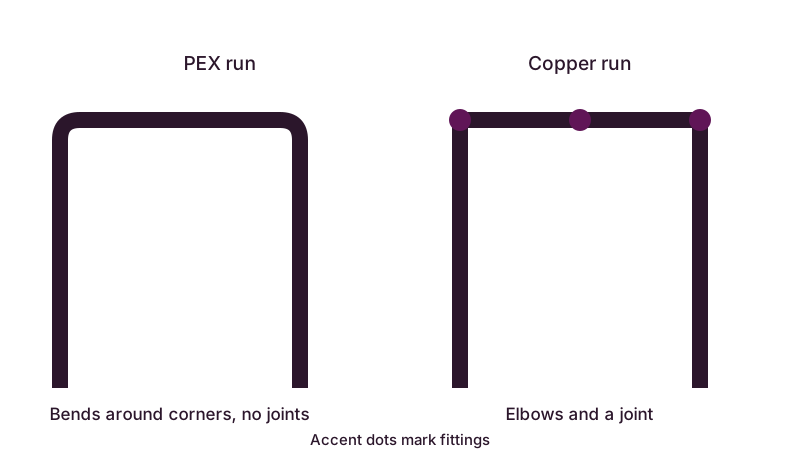
PEX costs less and goes in faster in a typical house; copper is stiffer and has the longer history. Take a 1950s Torrance ranch with a stucco shell and attic access it can be repiped in PEX for roughly half what copper would run, going by published figures. Copper earns its premium where pipes stay exposed. The sections below take each factor in turn. The wider repiping picture is in our house repiping guide.
Should an older South Bay house get PEX or copper?
PEX is the practical pick for most older homes here: it costs less and threads through walls faster. Copper suits owners who want the most proven material, anyone with exposed runs, and homes where only part of an existing copper system is being replaced. Neither choice is wrong, since California's plumbing code allows both.
Where each fits best:
- PEX suits a full replacement in a house with open attic space, a crawl space, or a bathroom you are already gutting. Flexible tubing snakes around corners without a joint at every turn.
- Copper suits visible pipe along a garage wall, since PEX has to stay out of direct sun, and suits owners who simply like metal.
- Mixed jobs happen too: copper stubs where fixtures connect, PEX through the walls.
California approved PEX for statewide plumbing code use in 2009, and plumbers in the area now run it in new and old houses alike. If your supply pipes are galvanized steel or polybutylene, the galvanized pipe replacement page and the polybutylene page explain why those are the usual reasons to repipe.
What will PEX and copper each add to the bill?
Looking at 2026 cost guides, a mid-size house costs between four and ten thousand dollars in PEX but eight to eighteen thousand in copper, and sources diverge at the extremes. Per square foot, think $2 to $7 for PEX and $4 to $14 for copper. Labor, more than tubing, drives it.
| Item | PEX | Copper |
|---|---|---|
| Whole house, mid-size | $4,000-$10,000 | $8,000-$18,000 |
| Tubing only, per linear foot | $0.40-$2 | $2-$8 |
| Wall and ceiling patching, if needed | $1,500 to $3,000 | $1,500 to $3,000 |
Read those as a guide drawn from several published cost pages. They are national figures, so expect local labor to nudge them. Slab homes, extra bathrooms and tight access all add money. Your binding number is a written quote, issued after the house has been walked; PEX repipe costs and whole-house repipe costs go deeper into the line items.
How do flow and pressure compare, pipe for pipe?
Same nominal size, similar flow in practice. Copper has a slightly wider bore at 1/2 inch, which helps flow on paper, while PEX uses fewer fittings, and every elbow and tee costs pressure. Wikipedia's PEX entry notes the fewer-fittings effect directly. Most households will not notice a difference at the tap. Pipe diameter and the number of fixtures matter more than material.
A fair way to compare 1/2-inch PEX with 1/2-inch copper is a run with the same fixtures. Copper's smooth rigid bore carries water a touch more freely per inch, but copper runs usually need a fitting at each change of direction, while one length of PEX bends around the turn. Installers sometimes upsize to 3/4 inch on a main trunk line to keep a bathroom group from starving when two showers run. If your pressure is already poor, the cause is often a failing regulator or corroded steel rather than the material you pick next, so check low water pressure causes before spending on pipe.
Which lasts longer, and what about cold weather?
Copper has the longer record in houses. PEX is newer, and the sources I read give no firm lifespan in years, so ask for the manufacturer's written warranty on tubing and fittings alike. Frost is a non-issue in Torrance, though for the record PEX survives freezing better than copper.
PEX has a few quirks worth knowing:
- Sunlight. Direct UV damages it, so it must be covered or kept inside walls and framing.
- Chlorine. It is formulated to resist chlorinated water. Pipe, fitting and adhesive combinations differ, so installers follow the maker's rules.
- Fittings. Brass fittings are the weak point on some systems; the brand and type matter.
Copper's quirk is water chemistry: aggressive water can pit thin-walled pipe over decades, which is how pinhole leaks begin in older homes. Have the plumber inspect what you own before choosing. According to Torrance's own 2025 annual report, imported wholesale water makes up 68 percent of Torrance's supply and local wells plus desalinated groundwater make up the rest, so what reaches your pipes is a blend.
Where does PVC fit in the comparison?
PVC is the stiff white plastic found in drains and irrigation, and nobody uses it for the pipes feeding your faucets. Some houses do carry hot water in CPVC, a related plastic, which can turn brittle as it ages. In a repipe, the real contest stays PEX against copper.
Do not use PVC for a hot supply line, and do not assume a plastic pipe in your attic is PVC. A plumber can tell by its color, markings and stiffness. Drain pipes are a separate system, and sewer-side material (cast iron in older Torrance tracts) is replaced under a different scope of work.
What if a bathroom project is already underway?
A gutted bathroom is the cheapest moment to renew its supply lines, whichever pipe you pick, because wall access is half the labor in a repipe. Have the plumber quote those lines now and the rest of the house later, then set that against one whole-house job.
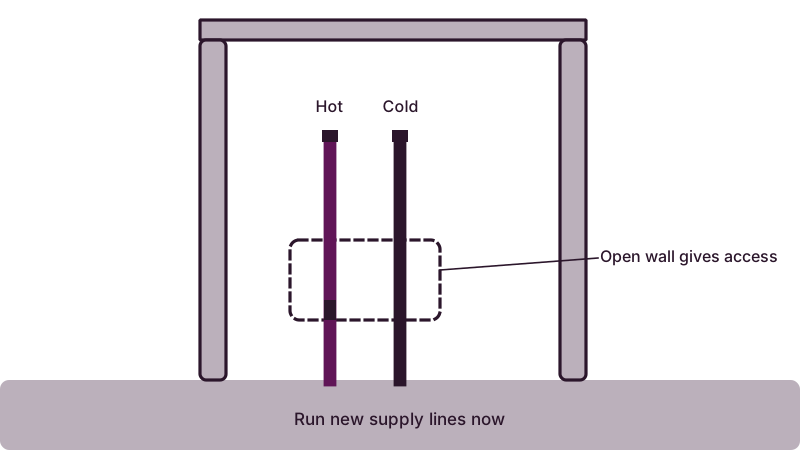
Our note on plumbing for a bathroom remodel shows what else to settle while the walls are open, and why homes get repiped covers the warning signs, from rusty water to repeated pinhole leaks. Unsure which PEX grade? Compare PEX-A and PEX-B.
Common questions
Can a repipe in Torrance legally use PEX?
Yes. PEX has been accepted under the statewide plumbing code since 2009, and it now serves both hot and cold lines in homes. A repipe is normally permitted and inspected. Check with the plumber about who applies to the City of Torrance Building and Safety Division.
Does PEX leak at the fittings more than copper?
Not as a rule. Fewer joints, in a continuous tube, mean fewer places to fail, but a poorly crimped or expanded fitting can leak, and so can a poorly soldered copper joint. Workmanship matters more than the material. Ask which fitting system will be used and whether it carries a manufacturer warranty.
Will PEX taste or smell different?
Water from new PEX can carry a faint plastic note for a short time after installation, and flushing the lines usually clears it. Flush every tap for a few minutes after a repipe. If the taste or smell lingers for more than a few days, tell the plumber so they can check.
Can my house be partly copper and partly PEX?
Yes. Plumbers join the two with transition fittings every day. A common arrangement keeps sound copper where it is and runs PEX to replace the failing section. The transition should use compatible brass fittings, and the plumber should point out any dissimilar-metal concerns.
Who may legally take on a repipe?
A contractor with a valid California license. The state's dividing line is a thousand dollars of work, and a repipe is far past it. The state's CSLB website shows status by license number. To start the process, send details through our quote page.
More services are listed on Torrance plumber.
Sources used
- Cross-linked polyethylene (PEX), types and properties
- Adoption of statewide regulations allowing the use of PEX tubing, California Building Standards Commission
- CSLB, home improvement contracts
- Published whole-house repipe cost guides, checked November 2026
Last updated