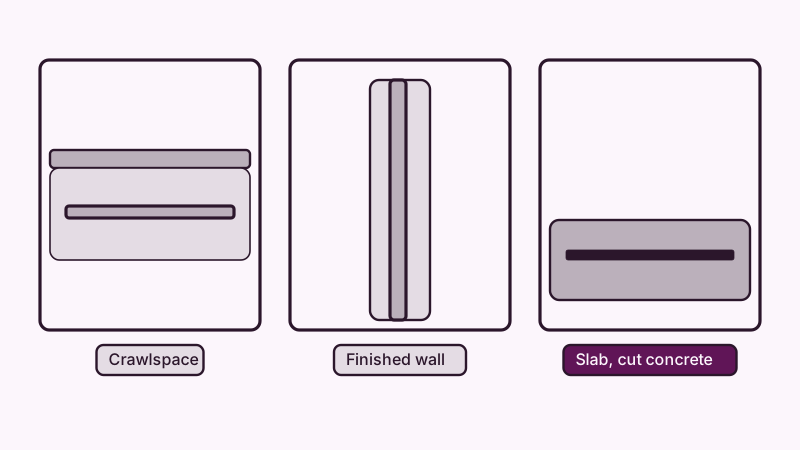
Bob Vila puts a whole-house repipe between $1,500 and $15,000, with a national average near $7,500. Size, access and material move a house around inside that range, and labor is a large share of the bill. If your house is one of the postwar Torrance tract homes that went in with steel pipe, this page prices the job by size, material and access. Whether to replace at all is the subject of repiping a house in Torrance, so this page sticks to money.
How much does galvanized pipe replacement cost?
Bob Vila's guide puts a whole-house repipe between $1,500 and $15,000, averaging about $7,500, depending on how many bathrooms the house has, whether the pipes are easy to reach and whether you choose PEX or copper. Southern California quotes can run higher than national figures, and only a written quote gives your number.
| Driver | Effect on the bill |
|---|---|
| Bathrooms and fixtures | More runs and valves |
| Access | Crawlspace is cheaper than slab or finished walls |
| Material | PEX costs less than copper |
| Wall patching | Often a separate line |
Published guides also break the price down by house size, but they disagree widely, so none is printed here. Only a written quote gives your number. A one-story house with a crawlspace and two bathrooms sits at the easier end of the range, while a two-story house on a slab with three bathrooms sits at the harder end, because every extra run adds pipe, fittings and time.
What changes the price of replacing galvanized pipe?
Three drivers: access, size and material. Pipes in a crawlspace under a raised floor cost less to replace than lines in a slab or behind finished walls. Each extra bathroom adds fixtures and runs, a second story adds time, and PEX undercuts copper widely.
Items that also appear on a quote: new shutoff valves at each fixture, a pressure regulator, a manifold, a water heater connection and the permit. Wall and ceiling patching afterward is often a separate figure on the quote. A house that has had patch repairs over the decades, with galvanized mixed into copper, can cost more because each connection has to be traced and replaced.
Is PEX or copper cheaper for replacing galvanized?
PEX, clearly. Published guides price PEX pipe at roughly $0.40 to $2 a linear foot against $2 to $8 for copper, and it installs faster since fewer joints are needed. A copper repipe usually costs noticeably more than the same house done in PEX.
Some owners favor copper for its long track record, particularly on exposed runs. PEX flexes around corners and shrugs off scale. Both are accepted when installed correctly, and neither is universal, so the house and the budget decide. For a deeper comparison, see PEX versus copper and which PEX type is better.
Is a partial replacement an option?
Sometimes. It costs less today, yet often serves only as a stopgap. A single failed section, such as a leaking elbow, a short run to one bathroom or the line near the water heater, can be replaced with copper or PEX using a transition fitting. The old galvanized left behind keeps corroding, and the next failure is usually a matter of time.
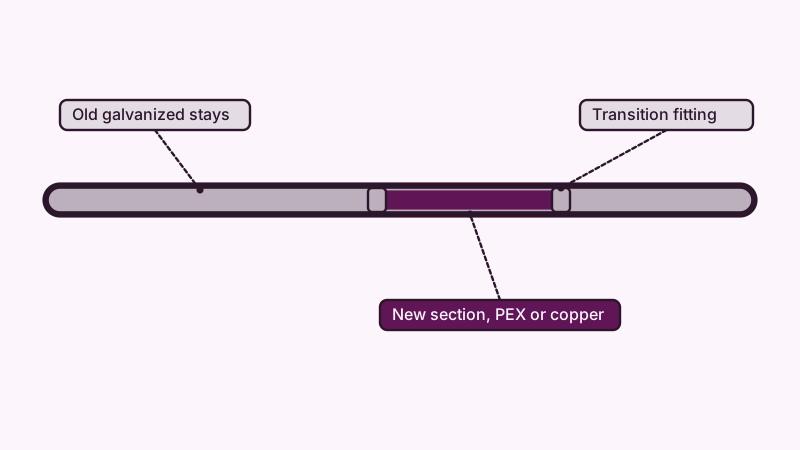
Partial work suits a system that otherwise tests sound, a house about to be sold, or a budget that must be staged. If pressure is already poor, rusty water appears or leaks keep coming back, the whole system is probably near the end, and piecemeal repairs add up. Have the pipes pressure and flow tested before deciding.
What signs say the galvanized pipes are due?
Pressure that keeps sinking, water that runs brown or rusty after the house has sat unused, flow that drops when two taps run, visible rust or white crust on pipes and leaks at joints are the common signs. Galvanized pipe corrodes from inside, narrowing the pipe, so the wall can look fine while the flow suffers.
Try this: open the hot and cold taps at the bathroom farthest from the entry and compare the flow with the kitchen. Check any exposed pipe in the garage or crawlspace for orange rust or mineral crust. A plumber's judgment beats the eye here, since a badly narrowed pipe can look fine outside. If weak flow is your main symptom, why water pressure is low goes deeper.
What does the quote, permit and cleanup include?
A full quote lists the material, fixture count, shutoff valves, the water heater connection, the permit, wall patching and who does it, and the schedule. New whole lines normally need a plumbing permit, issued by the city's building division, at a fee that differs by city.
The supply is interrupted while work runs, and an average house is often done in several days, so ask how water returns overnight. Leaks cost money too: the EPA puts the average household loss above 9,300 gallons yearly, one reason a failing galvanized system costs you before it is replaced. Compare the written scope line by line before choosing, and see repiping cost for the wider job.
Common questions
Is galvanized pipe unsafe to drink from?
Not usually by itself, but it rusts from the inside, which reduces flow and eventually leaks. Older homes can also have lead in solder or in the service line, so if you have any concern, ask your water supplier about the line into the house and consider having the water tested.
Must the whole system go at once?
No rule forces it. Leaks, pressure, water quality and cost drive the choice, and many owners do the whole system once problems start because patches keep failing. For a sale, a pressure test and a plumber's note can show how much to do first.
How many days will it take?
Two to five days is common for an average house, with water restored each evening. Finished walls and slabs lengthen it. The timing for your own house sits in the written quote that follows a visit, so you can plan around it.
Does insurance cover it?
Usually not for worn pipe, since policies tend to cover sudden damage rather than gradual aging. Some insurers may ask about galvanized or polybutylene pipe when you apply. Your policy wording decides, so ask the insurer and do not assume cover.
What belongs in the written scope?
Find out what material and fixtures the price covers, who patches the walls, who takes out the permit and how an unexpected finding, such as a damaged drain, is handled. Each line should be itemized so two quotes compare fairly.
The rest of our guides start from Torrance plumber.
Sources used
Last updated