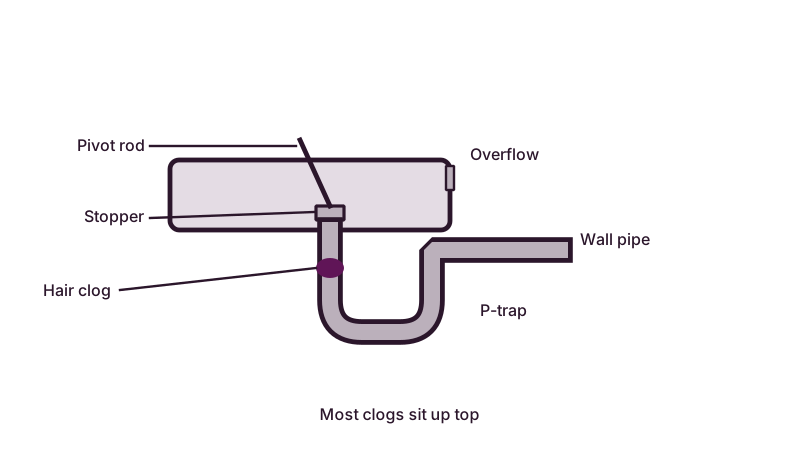
Think of the drain under a bathroom sink as a short obstacle course: the stopper, the tailpiece, the P-trap and then the wall pipe. A clog nearly always sits in the first half. So the sequence below goes from cheapest and cleanest to most involved, and you can stop the moment water runs. If several drains misbehave together, you are dealing with something bigger, and the drain cleaning and clogs hub is the better starting place.
Which part of the drain usually holds the blockage?
Almost always the top foot or so: the stopper assembly or the U-bend under the basin. Hair winds around the stopper's pivot rod and sticks together with toothpaste, soap scum and skin cells to form a rubbery plug. A slowdown that worsens across weeks is the typical story.
Water that races away for a day and then slows again suggests residue farther along, past the trap. Gurgling as the basin empties can hint at venting or a deeper line problem. When the tub and toilet misbehave too, put the tools down: the trouble is on a branch line serving several fixtures, or the main.
Step 1: can the stopper be cleaned by hand?
Often. Lift out or unscrew the stopper, drag off the hair and slime with gloved fingers or a bent wire or plastic drain tool, rinse it and reseat it. The stopper alone explains a big share of slow bathroom basins, and the job takes about five minutes.
Some stoppers lift straight out. Others hook onto a rod behind the faucet, secured by a spring clip or nut below the basin that you loosen to free them. Snap a photo before taking anything apart so the reassembly is easy, and set a bucket underneath. A minute of hot water afterward flushes loose debris.
Step 2: will a plunger help here?
It can, with the right technique. Plug the overflow slot using a damp washcloth, fill the basin to just above the plunger cup, press a small cup plunger flat over the drain and pump around a dozen strokes, keeping the seal intact. Then yank it free and watch whether the level falls.
The overflow hole matters: air escaping through it kills the pressure. Never plunge standing water that contains a chemical cleaner, since caustic splashes are dangerous. Keep a sink plunger apart from the toilet one.
Step 3: what does opening the trap involve?
Park a bucket beneath the elbow of pipe, then unscrew the two slip nuts with your hands or pliers, lower the trap and tip out the sludge. Scrub, rinse, and rebuild with nuts that are snug but not crushed. Turn the tap on and inspect both joints for beads of water.
Check the washers or gaskets and replace them if they are flattened or cracked. Slip-joint leaks usually come from a cross-threaded or overtightened nut. If the trap is full of hair and sludge, you have probably found your clog. If it is clean, the blockage sits farther down, in the wall pipe.
Step 4: when is a snake the next tool?
With a clean trap and a basin that still crawls, feed a hand snake or a plastic barbed strip into the drain opening, or into the wall pipe after you remove the trap, turn it as you push, and pull out whatever catches. Hand tools reach about the length of the line to the wall.
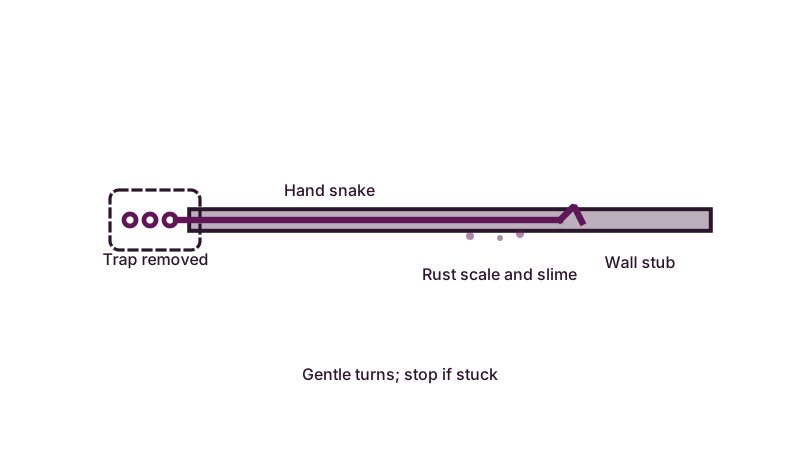
Cheap barbed strips work well on hair near the stopper. A coiled hand snake reaches into the wall stub. Be gentle with older metal pipe: a forced snake can scratch or catch. In many postwar South Bay homes the drains behind the wall are older cast iron or galvanized pipe that has rust scale, and that rough surface collects soap and hair. If a snake keeps coming back with rust flakes and slime, a camera look is worthwhile.
What about chemical drain cleaners and baking soda?
Leave the harsh chemicals on the shelf. Caustic liquids burn skin and eyes, can splash from a blocked basin, may attack some pipe, and leave a pool of hazardous water that the next person has to handle. Baking soda with vinegar is harmless but mostly for show: it freshens light residue and does nothing to a packed hair plug.
If a chemical went down already, let the plumber know on arrival, since gloves and goggles matter around leftover chemicals. Mixing cleaners can release hazardous fumes, so do not.
Which signs say the job has outgrown a home fix?
Ring for help if the shower and toilet drain badly too, the basin refills after the trap is cleared, foul water bubbles into the tub, a sewer odor drifts up, or relief never lasts beyond a few days. Each of these hints at a branch drain or the main line.
A drain that stays slow can come from pipe scale, a partial blockage or a venting fault. An odor rising from the drain is its own topic: see getting rid of sewer smell. For a stubborn clog, send the quote form and name the fixtures involved. A call-out fee usually applies, and plumber service call costs explains it.
Neighbouring problems have guides of their own: a clogged kitchen sink, a shower holding standing water and a blocked toilet.
How do you keep it from clogging again?
Put a mesh strainer over the drain, wipe hair off the stopper each week, run hot water after shaving or washing hair, and keep thick creams and paste out of the basin. Lifting the stopper monthly heads off most repeat clogs.
Hard water in parts of the South Bay leaves mineral film inside the stopper and pipes, which makes soap and hair stick. A periodic vinegar rinse on the stopper helps keep it clear. If you see the same clog in every season, ask a plumber to check the pipe behind the wall.
Common questions
How long should this take?
The stopper takes about five minutes and the plunger a few more. Dropping and cleaning the trap runs fifteen to thirty minutes with cleanup. Working a snake into the wall pipe takes longer, and a plumber with a powered machine can often finish a stubborn line within an hour.
What belongs in the quote for a clog?
Pin down the pricing basis (fixed or by the hour), the equipment that goes into the pipe, any camera inspection for a returning clog, and the change in cost should the main line be involved. Putting those terms on paper first is sensible.
Will someone need to open the door and stay?
Yes, at least at the start. Whoever is home shows which basins drain badly so work begins in the right place. Empty the vanity, clear the counter, and share your history with the drain, especially any chemical poured down it.
Why is it slow again after cleaning?
Buildup further down the pipe, a hair clog in the wall stub or scale inside older pipe can keep catching debris. If the problem returns within a week or two, stop repeating the same fix. A camera inspection shows what a snake cannot.
Is a liquid drain cleaner a safe option for a bathroom basin?
Liquid cleaners are risky because they can splash and are hazardous to skin and eyes, and they do poorly against hair plugs. If a clog resists mechanical clearing, calling a plumber is safer than adding chemicals to standing water that someone will then have to work around.
The rest of our guides start from the plumber guide for Torrance.
Sources used
- Plumbing trade guidance on bathroom sink drains and P-traps, checked November 2026
Last updated