Kitchen drains block for a dull reason. Fat from the pan hardens on the pipe wall, then catches coffee grounds, rice and peelings until only a pencil-wide gap remains. So the cure is boring too. Plunge, clean the trap, then run a hand auger, and leave the bottle of caustic cleaner on the shelf. This is the order a tradesperson follows, and the problem belongs to the wider clogged toilet and drain plumbing in Torrance family.
Which fix is worth trying first?
Start with a cup plunger. Ladle out most of the standing water. A twin sink needs its other drain stopped, and the overflow slot needs a damp cloth pressed in. Seat the plunger flat and pump about twelve times with the cup staying in contact with the basin. Soft grease and food plugs often give way to that alone.
Before plunging, sort out the extras around the sink:
- A disposal. Power comes off first, by pulling the plug or tripping the breaker, and hands stay out of the grinding chamber entirely. A unit that hums yet will not spin usually has a tripped red reset button beneath it, and a hex socket in the base that the supplied key can turn by hand.
- A dishwasher. If dishwasher water surfaces in the sink, or the basin fills during a cycle, the shared drain hose or the disposal knockout is the suspect; clogged dishwasher drains go into it.
- Two basins. Water that rises in the second basin while you plunge the first means the blockage lies beyond where the two drains merge.
Do hot water, dish soap or the vinegar trick help?
Sometimes, on a grease plug that has not closed the pipe completely. Dish soap goes in first, a hearty squirt of it. Follow with the hottest tap water, or kettle water that has sat a minute, and do it twice. Baking soda and vinegar fizz impressively, yet the evidence that they clear a real clog is thin. Fully boiling water risks cracking porcelain or softening plastic fittings.
Heat works because kitchen clogs are mostly cooled fat holding food debris in place; warmth lets it slide. It does nothing against a dense plug of grounds or rice, or against a trap full of sludge, which needs emptying by hand.
If hot water clears the sink but the drain slows again within days, the pipe is narrowing and the problem will recur. Why that happens is covered in slow-draining sinks.
How do I take the trap apart and clean it?
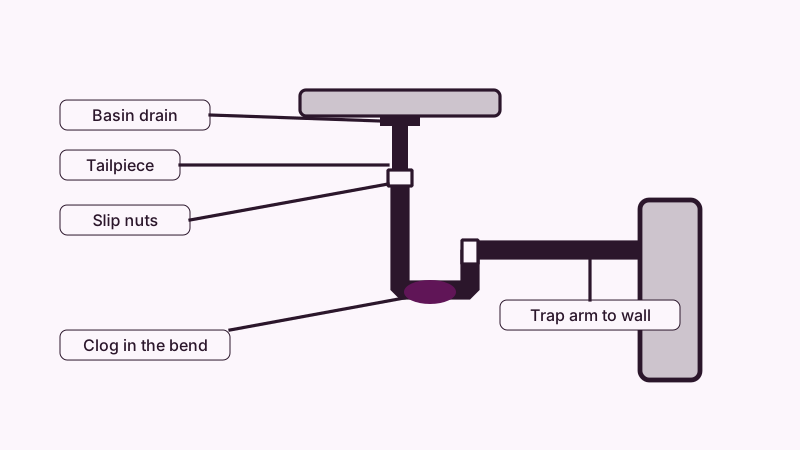
Set a bucket beneath the bend. Unscrew its two coupling nuts, fingers first and pliers if stubborn, lower the trap away, pour out the contents and scrape the sludge off the walls. Check the washers, reassemble with the nuts hand-tight and test with water. This is where most kitchen clogs live, and a quarter of an hour usually covers it.
In order:
- Empty the cabinet, and put a towel down with the bucket on top of it.
- Back off the slip nuts at both ends of the U, turning counterclockwise.
- Slide the trap off, pour out the water and clear the contents; a bent wire or old toothbrush reaches corners.
- Shine a flashlight into the pipe stub at the wall and look for debris.
- Reassemble with the washers lying flat; a crooked nut will weep.
- Run the hot tap, then touch dry tissue to each joint to catch a drip.
With a disposal fitted, the trap hangs from the disposal's outlet; check that outlet elbow too.
When is a hand auger the right tool?
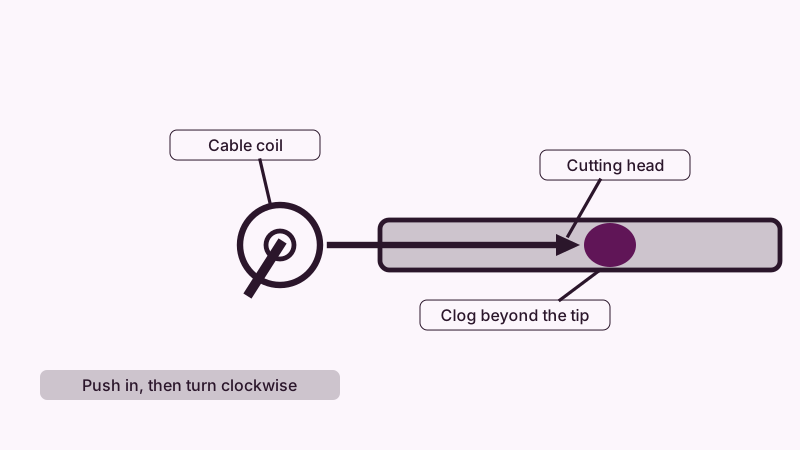
Reach for it once the trap is clean yet the basin stays full. Push the cable into the pipe at the wall and turn the handle clockwise. When resistance builds, wiggle the head through the blockage or snag it, then retract the cable gently, cleaning it as it emerges. Finish with hot water. A cable that always stops at the same distance suggests something deeper.
Wear gloves and spread old towels first, and never force a cable that refuses to turn. A kinked cable can jam inside the pipe. Cast iron drain, common in older houses from the postwar decades, is rough inside and holds grease and scale, which makes a snake feel stiffer there than in smooth plastic. If you must lean on it, stop.
Why do plumbers warn against chemical drain cleaners?
Skin and eye burns are the first danger, pipe and finish damage the second, and a failed treatment leaves caustic water sitting in the sink for whoever works on it next. Products containing lye or sulfuric acid are hazardous when splashed, and mixing cleaners can release toxic fumes. Plunging, a trap clean-out and an auger are safer.
Tell the plumber if you already poured something in, so they glove up first, and do not plunge standing water that holds cleaner, because it can spatter back. Prevention is dull but works: wipe greasy pans with paper, bin cooled cooking fat, and fit a strainer.
How do I tell that the blockage is beyond the sink?
Other drains running slowly, a toilet gurgling as the sink empties, grey water appearing in the shower or a floor drain, or a sink that blocks again in days: each says branch or main line. One sink alone is a sink problem. Trouble at several fixtures at once means bringing in a long cable or a camera.
Torrance, like much of the South Bay, has many homes with older drain lines, and roots can reach sewer laterals. Blockages that keep returning often come from a cracked stretch or a sag, which a video inspection can identify. A camera inspection is priced separately by most plumbers, and some include it with a cleaning, so ask. For bathroom basins, see bathroom sink clogs.
What does professional clearing run?
Simple sink clearing is the cheapest tier for a kitchen sink that drains slowly or has stopped. Snaking, hydro jetting and a camera inspection each cost more, and after-hours visits cost more again. The written quote sets the price. Ask for the written quote before any work starts.
Prices differ between plumbers. Hydro jetting clears grease buildup thoroughly, but older pipes may not take the pressure, which is why plumbers often camera the line first. Ask what the figure covers, whether the call-out fee comes off, and what changes if the main line is the true culprit. For a written quote, begin at the quote page.
Common questions
How long should unclogging take me?
A plunger or hot-water flush takes minutes. Cleaning the trap runs fifteen to thirty minutes, and an auger takes similar time. A plumber usually needs under an hour. Still blocked after the trap and the snake? Stop there and book a plumber rather than escalating.
What do I need to know before booking a drain plumber?
Write down the plumber's contractor license number and the visit price. Confirm what that covers, whether a camera costs extra, and the plan for a main-line blockage. A cable or a jetter may be used, so ask which. The quote should come in writing before work starts.
Will someone need to stay home?
Yes: a grown-up who can show the sink, describe what was tried, and watch it drain at the end. Empty the cabinet under it beforehand, and say if any chemical cleaner went down the drain earlier. Empty the cabinet beforehand, and mention any chemical cleaner already used so the plumber can wear the right gloves.
Is boiling water safe for the drain?
Not as a rule. Porcelain can crack, and PVC traps and joints can sag. Use hot tap water, or kettle water that has rested a minute. Metal pipe tolerates it, and hot water eases a grease clog, though it cannot dislodge a hard plug or mend damaged pipe.
Why does the sink keep clogging?
Repeat clogs mean grease still lining the pipe, a low spot in the trap or branch, or too much food passing through the disposal. Scrape plates, fit a strainer, and send fat to the trash. If it returns within weeks, have a plumber look with a camera.
The rest of our guides start from Del Amo Plumbing plumber.
Sources used
Last updated