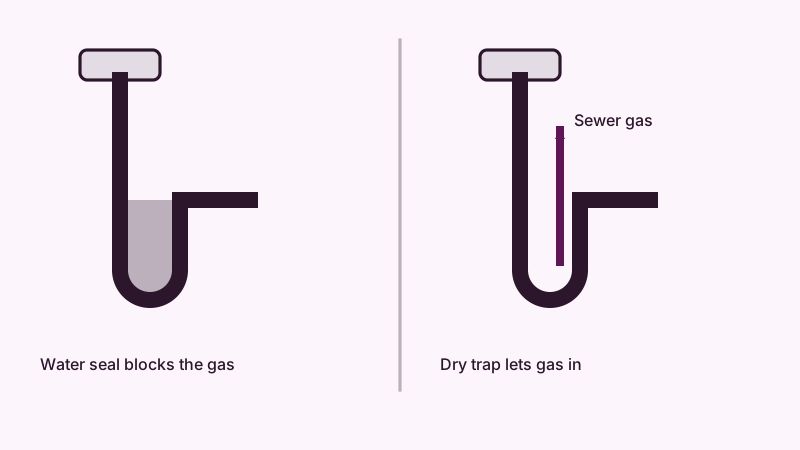
Start with the drains nobody uses. A guest shower, the laundry standpipe and the garage floor drain all lose their water seal within weeks, and gas walks right in. Send a quart of water down each. Odor gone by dinner? Finished. Still there? Keep reading, or head to the Del Amo Plumbing home page and we will arrange a plumber.
Which part of the house is the odor coming from?
Walk room to room with your nose before picking up a tool. If it hangs in a single bathroom, suspect that room's trap, toilet seal or fan duct. If it drifts across the ground floor and peaks at an exterior wall or the garage, suspect the vent stack, a cracked drain under the slab, or the pipe heading to the street.
Sewer gas is mostly methane with some hydrogen sulfide, which is where the rotten-egg note comes from. Faint whiffs are mainly a nuisance. A strong, constant odor in a closed room deserves fresh air and a prompt fix, because the gas displaces oxygen in a confined space and can irritate eyes and throat.
Natural gas is a separate matter. The utility deliberately gives it a rotten-egg scent. If that smell is present and no drain explains it, walk outside first and make the call to SoCalGas from there.
Could a dry P-trap be the reason?
Quite possibly, which makes it the first check. Every fixture drain keeps a U-shaped bend full of water as a gas barrier. Spare-room traps evaporate dry in a few weeks, quicker beside a furnace closet. Pour in a cup of water, plus a spoonful of mineral oil in a seldom-used drain to slow evaporation.
Two quick follow-ups:
- Odor returns every few weeks? Suspect a siphoning trap or a weeping joint. Feel under the sink for dampness.
- Bubbling noises after the washer drains? That points toward a partial blockage downstream, which our guide to clearing a slow kitchen sink and the clogged toilet service page explain.
Is the toilet seal failing?
Between the toilet base and the drain flange sits a wax or foam gasket. Once it flattens, or the bowl starts to rock, gas leaks around the base, often alongside a faint damp ring on the floor. Shove the bowl sideways. Any movement says loose bolts or a dead gasket.
Tightening the closet bolts, alternating sides in quarter turns, fixes a wobble, but a failed ring means lifting the toilet, scraping the old wax and setting a new ring. Hand that job over if the floor nearby feels spongy or stained, since a slow leak rots subfloor. A bowl that keeps refilling by itself is another fault, see stopping a running toilet.
Why does it smell worse after rain or when the weather turns cold?
Pressure and airflow change. A blocked roof vent cannot let the system breathe, so water sloshing through the drain pulls the trap seal and pushes gas back inside. A bird nest or leaf pack in the vent pipe does it, as does a damp low-pressure day that keeps the gas close to the ground.
Cold evenings add another cause: a hot furnace or water heater running draws household air up and out, which pulls gas in through any dry trap. Winter smells in a Torrance house are usually this, not freezing. Heavy rain can also send runoff into a cracked yard line and surge a shared sewer main, which brings a smell that arrives and leaves with the storm.
Checking the vent means someone on the roof. Skip that unless you are comfortable with heights and have a roof-rated ladder.
Where does my sewer line actually run?
Hunt for the cleanout: a capped pipe, roughly three to four inches across, rising near the foundation at a front corner or by the garage. From there the lateral usually heads straight toward the street tie-in. The city building division sometimes holds plans showing the route, and a plumber can trace it with a camera and locator.
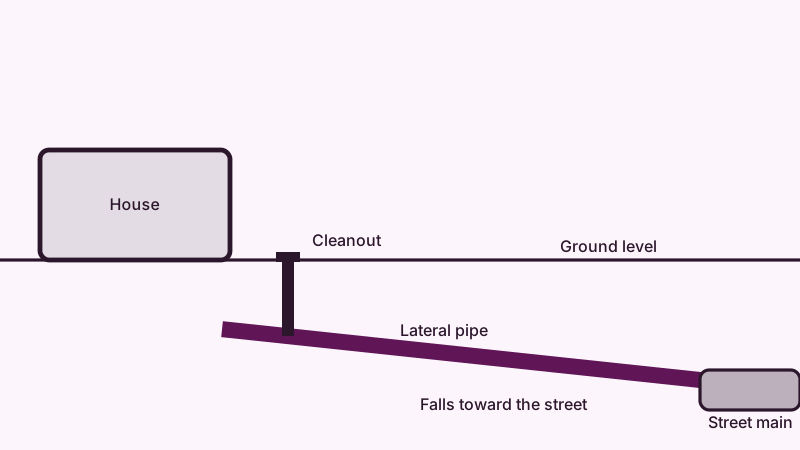
In the postwar neighborhoods of Torrance, Lawndale and Gardena, many laterals are original vitrified clay or Orangeburg fiber pipe. Clay joints let roots in, and Orangeburg can flatten or blister with age. Neither is doomed, yet only a camera run shows which material you own. Typical signs of a break include gurgling toilets, repeating clogs, wet turf over the line and a smell outside near the cleanout.
Can a sewer line be replaced with little digging?
Three methods exist. A spot repair excavates one broken stretch. Lining drags a resin-soaked sleeve into the old pipe and cures it there. Bursting pulls new pipe along the old path while cracking the old one outward. Lining and bursting need only small pits at each end, sparing the lawn and driveway.
The camera footage picks the method. A sleeve only works in pipe that remains round and aligned, so a collapsed or sagging belly rules it out. Cost guides we read put a full lateral job anywhere from low thousands up past ten thousand dollars, driven by length, depth and technique. Ask to see the video. A lateral repair needs a city permit, so confirm who pulls it. The owner answers for the pipe between house and property line, while the street main is the sewer agency's.
Can you fix a sewer line yourself?
Only the small jobs. Topping up traps, feeding a snake through the cleanout, snugging a toilet and wiping a vent screen suit a handy owner. Cutting into the lateral, patching buried pipe or opening a line brimming with waste does not. California sets a small-job dollar limit above which plumbing needs a contractor, and buried mistakes get pricey.
Before anyone arrives: if sewage is pooling in the yard, stay clear of it, keep children and dogs away, and take pictures.
Common questions
Is sewer smell in a house dangerous?
At low levels it is mostly unpleasant. At higher levels in a closed space, hydrogen sulfide stings the eyes and can bring headaches or nausea, and methane can accumulate. Open windows, avoid flames, and have the source found quickly. A persistent smell, or one that makes anyone in the house feel ill, deserves a professional look promptly.
Can a septic or blocked vent cause the smell?
In the South Bay nearly every house is on city sewer, so a septic tank is unlikely. A blocked vent stack is a real possibility. It stops air entering the pipes, so traps lose their water seal and gas drifts indoors, especially during or after heavy use. A plumber can clear it from the roof.
Should I pour bleach down the drain?
Skip it. Bleach does not cure a dry trap or a failed seal, and it can react badly with other cleaners. Plain water refills a trap, and a drain enzyme cleaner helps if the cause is film inside a drain. Never mix chemicals, and never use a chemical drain opener before a plumber arrives, since it can burn skin.
How long does a visit for sewer smell take?
Refilling a trap, resetting a toilet or looking at a vent takes an hour or two, and a camera pass down the lateral takes about as long again. Repairs that need digging, lining or bursting are scheduled as a separate job, after the camera findings and a quote.
Sources used
- Published sewer lateral repair and relining prices from plumbing cost guides, checked November 2026
Last updated