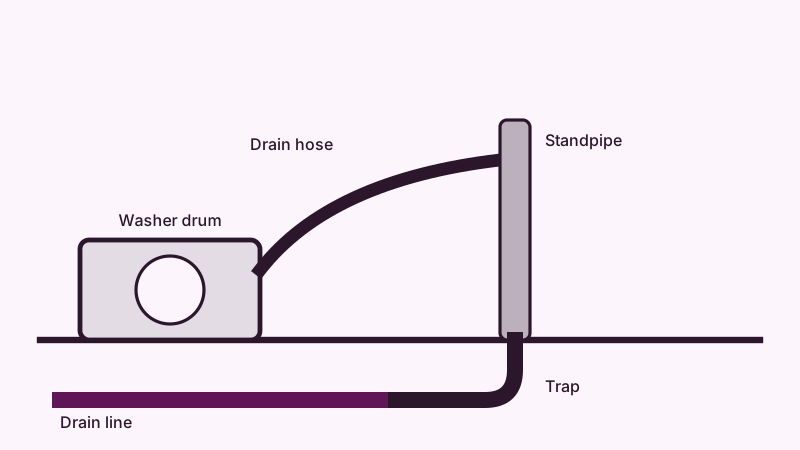
Laundry day reveals a clog fast: a drum that sits full of gray water, a standpipe that bubbles or spills, a gurgle from the bathroom drain nearby. Our drain and clog hub covers the whole house. This page follows the water from the washer to the sewer so you can find where it stops.
How do I know the washing machine drain is clogged?
The signs are slow draining at the end of a cycle, water left in the drum, water rising or spilling from the wall standpipe, a musty odor around the laundry box, and gurgles from other drains whenever the washer empties. Any one of these can point to a blockage somewhere between the machine and the sewer.
Where the symptom shows matters. If the drum holds water but nothing backs up at the wall, the problem is probably inside the machine: the drain hose, the pump filter or the pump. If water climbs the standpipe, look at the trap or the pipe after it. Gurgling in the tub, or water backing out of a floor drain as the washer empties, points at a pipe shared with other fixtures, or the sewer main.
A washer dumps many gallons in one hard surge, so a half-blocked pipe shows up on laundry day long before a sink complains. Stand by for one full drain cycle and note the moment the flow slows.
What can I check inside and behind the machine?
Begin with the machine itself. Unplug it, look behind it for a kinked or crushed drain hose, confirm the hose is not shoved too deep into the standpipe, and clean the pump filter if a front-loader has one. A small door low on the front often hides it. Keep towels and a shallow pan handy.
Lint is the usual enemy. The filter catches coins, lint balls, hair ties and small socks, and a full one will slow every drain cycle. Remove it slowly, because the drum water behind it will pour out. Rinse it, check the opening for debris and refit it hand-tight. Top-loaders usually have no user filter, and some have a lint screen inside the tub or agitator.
Pull the drain hose off and look down it, or flush water through it into a bucket. A slimy interior or a crust of soap and lint means clean it or replace it, and hoses cost little. Clear hose, clean filter? Then the wall is next.
What is the way to open up the standpipe and trap?
With the hose out, run water into the standpipe and watch. If it drains steadily, the blockage was in the machine. If it rises slowly, a trap or line is partly clogged. A plastic drain snake or a small hand auger can reach a few feet into the standpipe. Use it gently, and stop if you meet hard resistance.
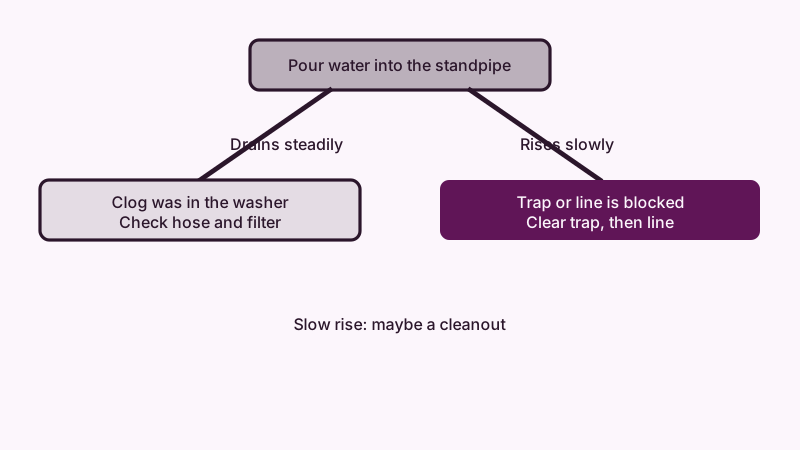
Below the standpipe sits a trap, a curved bend that keeps a water seal against sewer gas. Lint, soap residue and hair collect there. Do not pour harsh drain chemicals into it. They are hazardous, can splash back, and can damage old pipe. Hot tap water and a little dish soap, run through after the snake, is the gentler option.
California's plumbing code sets rules for the standpipe, including its height and the trap it connects to, and I could not open the exact figures, so I will not quote them. If your standpipe looks too short, too tall, or sits with no trap, a plumber should correct it, because a wrong setup can siphon or overflow.
Why does it keep clogging, and could it be the main line?
A clog that returns means the quick clearing missed the cause: soap and lint caking a rough pipe wall, a sag or bad joint in the line, roots reaching the lateral, or trouble in the main sewer. Gurgling in other drains while the washer empties is the clearest sign of a shared line issue.
Homes from the postwar boom in Torrance, Gardena and Lawndale frequently have drain lines of cast iron or clay, and those roughen with age, gather scale and invite roots. A washer's high-volume discharge exposes these weaknesses first. If you hear gurgling in a toilet when the washer drains, or water appears in a tub, stop using the washer and call.
A camera inspection can show what is inside the line and where the blockage sits, and it avoids guessing. We cover what inspections cost on the plumber inspection cost page. Water welling up in a floor drain or toilet is a sewer-line problem, whatever the laundry is doing.
What does the bill look like?
National guides show plumber labor between $75 and $150 hourly, with a trip charge of about $50 to $100 on top, and a plain standpipe clearing is normally a short visit. Clearing a longer line, running a camera or repairing pipe costs more. Only the written quote after a look is the true price.
What changes the price: how far the blockage sits, whether a cleanout is accessible, the pipe material and condition, and whether a camera is used. A buried or hard-to-reach line, or roots, costs more than a lint plug in a standpipe. Our clogged toilet plumber cost guide shows how drain clearing is priced in general.
To get a price, send a quote request that mention the washer's behavior, gurgles elsewhere and how old the home is. Weekdays from nine to five is when we read them. Water already on the floor? Stop the washer and close its supply valves, then read leak help.
Common questions
What stops a washer from emptying?
Usually a kinked or blocked hose, a dirty pump filter, a dead pump, or a clogged standpipe and trap. Hose and filter come first, then a test of how freely the standpipe takes water. Gurgling elsewhere in the house suggests the clog is farther along, past the laundry.
Should I pour chemical cleaner down the standpipe?
I would not. Chemical cleaners are hazardous, can splash back when the washer surges, and can harm old fittings. A snake, a cleaned hose and filter, or a plumber with proper tools is safer, and a clog that recurs deserves a professional's eye.
Can a clogged washer drain cause a flood?
Yes. A standpipe that cannot take the washer's burst of water will overflow onto the floor. That means ruined flooring and possible damage to the wall. If water rises in the standpipe, stop the cycle, turn off the washer and call for help before the next load.
How frequently should the filter and hose be cleaned?
Clean the pump filter every few months if your front-loader has one, and look at the drain hose and standpipe at the same time. Heavy lint, pet hair or a large household may mean more often. Many owners replace washer hoses on a regular schedule to avoid failures.
The rest of our guides start from plumber in Torrance.
Sources used
- California Contractors State License Board, hire a contractor
- Published plumber rate guides, national, checked November 2026
Last updated