A mobile home in Torrance rarely faces a hard freeze, but a clear night can still drop pipes under the floor below freezing, and those lines have less insulation than a house. A few hours of prep before a cold snap, or a full drain-down before a long absence, covers it. We arrange plumber visits across the South Bay from the Del Amo Plumbing home page, and this page is the homeowner's share: what to check yourself, which jobs to leave to others it is time to phone a plumber.
Does a mobile home in Torrance really need winterizing?
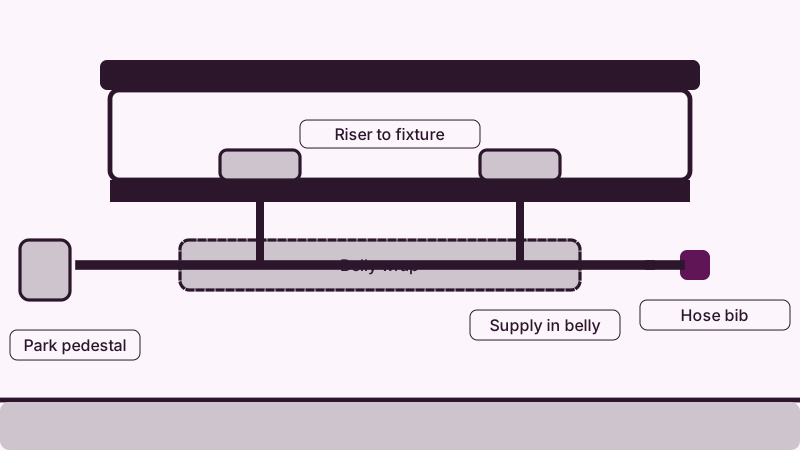
It needs less than homes in cold states, but a short cold snap is enough to threaten exposed lines. Pipes in the belly under a manufactured home, the water feed at the park pedestal and any hose bib are the weak points. For a lived-in home, a quick checklist works. For an empty home, drain it.
Freezing needs sustained cold, so most South Bay winters pass with no trouble. The risk is the unusual night, and the damage tends to hit outdoor connections first: the supply hookup, a backflow device, an outside spigot, and a washer box on an exterior wall. Make the checklist habit before the cold forecast, not after.
What should be done ahead of a forecast cold night?
Foam-wrap any exposed supply pipe and the outdoor shutoff, put a cover on the hose bib, and prop open the cupboards below sinks on outside walls. Let the faucet farthest from the main drip slowly through the night. Heat tape is an option only if it is the pipe-rated kind, installed per its instructions, and replaced once worn.
A short list for the afternoon:
- Disconnect and drain garden hoses.
- Know where the indoor main shutoff is, so one turn stops a split pipe.
- Check that skirting around the base is intact, since open gaps blow cold air onto belly pipes.
- Keep the heat on at a modest setting if you are away for a night or two.
- Do not run an open flame, a torch or a space heater near pipes or insulation.
Heat tape is a fire risk if it is old, damaged or overlapped, which is why it deserves the care in the instructions.
How do you drain a mobile home you will leave empty?
Shut the main, open every faucet, flush toilets, drain the water heater using its drain valve, and clear the low points. Then pour non-toxic plumbing antifreeze, the pink propylene glycol kind sold for RVs, into drains and traps so water does not freeze in them. Never use automotive antifreeze.
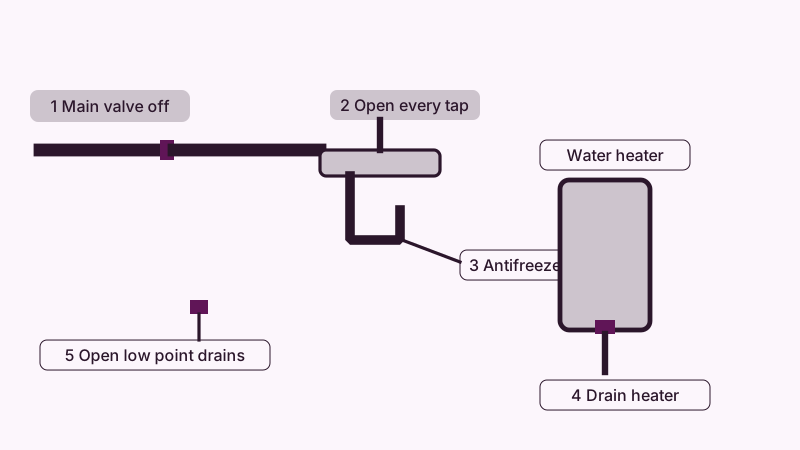
Sequence counts. Cut the heater's power or gas supply first, so an element or burner never fires on an empty tank. Drain it, then open the taps so air can enter. Pour a measured amount into each sink and tub trap and the toilet bowl. Write down what you did and tape the note by the main shutoff so you or the next person knows to refill and flush the system on return.
A gas water heater or furnace changes the rules. Gas line work is for a contractor, never a weekend job. Heating and HVAC servicing is its own trade, so a furnace check goes to a heating contractor. If gas ever smells, walk out, phone SoCalGas on the 1-800-427-2200 line once you are outside, and if anyone is in danger call 911.
What do mobile home plumbing layouts look like, and where do things go wrong?
Most manufactured homes run supply lines in PEX or older plastic through the belly, with branch lines rising through the floor to each fixture. Drains run through the same cavity to a single connection at the sewer riser. Problems cluster at fittings, at the park connection and wherever pipe crosses a frame member.
Common trouble spots:
- Vents. Drain traps need air. A blocked or capped roof vent causes slow drains and gurgles. Check that the vent cap is clear.
- Insulation. Torn belly wrap or missing blown insulation exposes pipe.
- Leaks. Because of the belly cover, a leak can go unseen for a long time. Watch the floor for soft spots and your meter for movement. The meter test in spotting a burst pipe takes two minutes.
- Connections. The line from the pedestal to the home belongs to you or to the park depending on the community's rules. Ask management before replacing it.
When the belly is hard to open, a plumber with the right access tools saves time. For what a repair visit involves, see leaks and burst pipes.
What does a maintenance visit from a plumber cover?
Think of the maintenance plumber as preventive care for a home's water system. The visit covers leak checks, a pressure reading, slow drains, valve operation, a check of the water heater and replacing worn parts before they let go. Catching the small fault early is the entire point.
In a manufactured home that might mean a pressure check at the pedestal, a look at the belly, a heater flush and a leak survey. Within a community, the park's rules on who may touch which line apply. Put it on the calendar once a year, ideally in the fall, so winter does not find the weak spot.
How long do the pipes in a house last?
No set number applies, because material and water chemistry decide. Galvanized steel often needs replacing within a few decades, copper can last 50 years or more, and PEX has a shorter track record but has performed well so far. A better test than age is how the pipe behaves.
Warning signs are repeated leaks, discolored water, and fading pressure. If a manufactured home still has its original lines and they are failing, a replacement quote is worthwhile. For comparison with site-built houses, the page on repiping costs shows the range for whole-house jobs.
Common questions
How long does winterizing take?
A cold-night checklist takes about an hour for insulation, hose bibs and cabinet doors. A full drain-down of an empty home is longer, often a few hours, since you drain the heater, open every fixture, add antifreeze to traps and then double-check. Hiring it out is quicker and adds a pressure test.
What belongs in the winterizing quote?
Ask what exactly is included, whether the water heater is drained, whether antifreeze is used and of what type, and whether a written record is left. Ask who restores the system in spring. If the park owns part of the lines, ask which parts you can authorize work on.
Is someone required to be there?
Yes, for the first few minutes: someone lets the plumber in, shows the main shutoff and the heater, and approves extras. Tell the plumber how long the home will sit empty. Parks sometimes require notice before water is shut off, so give it first.
Can I wait for a hard freeze forecast?
Waiting is reasonable here because hard freezes are rare, but forecasts for the South Bay can change quickly. Keep supplies on hand, such as foam wrap, a hose-bib cover and the shutoff location, so a few hours is all the prep you need.
Who pays when belly pipes freeze?
The answer follows the pipe. A park commonly owns the line up to the home's connection, while you own what runs in and under the unit. Read your lease, the park rules and your insurance policy before trouble starts, since each can change who pays.
Sources used
- Manufactured home plumbing practice, from published manufacturer and plumbing-trade guidance, checked November 2026
- EPA WaterSense, Fix a Leak Week
Last updated