Open the closest sink on hot for sixty seconds. Steamy water there points at the washer. Weak warmth means a heater or pipe fault, with the washer merely the first place it shows. Everything below branches from that test, within our water heater repair section.
Washer fault or heater fault, how can I tell?
Compare the sink with the machine. Hot at a laundry-area tap while the washer runs cold puts the blame on the machine, its hoses or its settings. A sink that is also tepid, or needs minutes to warm, puts it upstream, on the heater, the pipe run or a closed valve.
Also try a second tap far from the heater. A long pipe run in a larger house can mean the first gallon is cold, which a washer fill may never get past. A washer that runs only a short fill of hot water can mix mostly cold if the line has not warmed.
What washer problems cause cold-only cycles?
Five things come up most: the temperature setting, hoses swapped or reversed, a blocked inlet screen, a failed inlet valve, and a faulty temperature sensor or control board. Before anything else, read the cycle setting, since eco or cold-wash modes, and newer high-efficiency models, draw little hot water by design. Select a normal hot or sanitize cycle and test again.
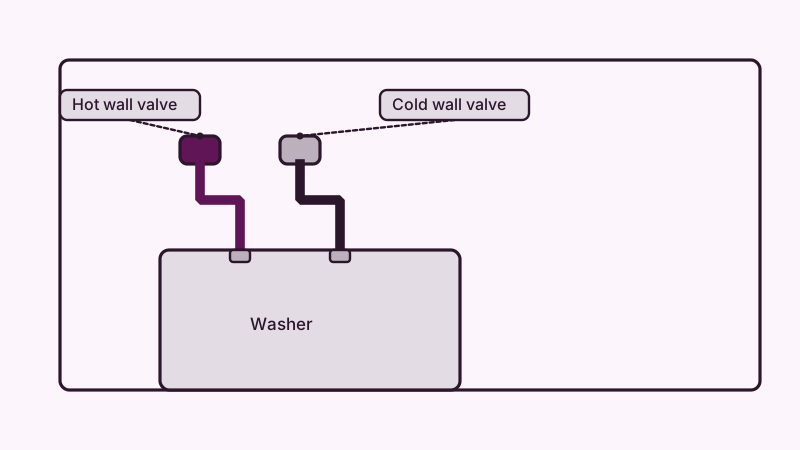
Check the hoses at the back of the machine. Hot goes on the connection marked H, usually with a red band, and cold on C, with blue. Swapped hoses are common after a move or a new machine. Trace each hose to its wall valve and confirm the red one is on the hot side.
How do I clean the inlet screens?
Close both wall valves, unplug the machine, and unscrew the hoses from the washer's back. Inside each inlet port sits a small mesh screen. Pull it with needle-nose pliers, rinse out grit and mineral flakes, and put it back. A clogged hot screen cuts hot flow, so the machine mixes in more cold or fills slowly.
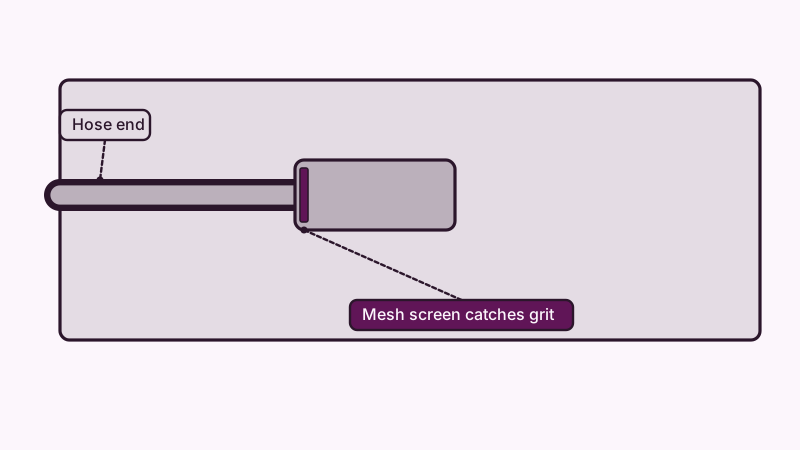
Torrance water is a mix of imported supply and local groundwater, and mineral flakes are a frequent cause of clogged screens. Do the same for the hose-end screens, if fitted. Screw the hoses back on finger-tight, nudge them a bit more with pliers, then open the valves gently and watch for drips. Why it keeps coming back is explained in preventing hard water scale.
What if the machine itself has a failed part?
If the settings, hoses and screens are right and the sink runs hot, the likely culprit is the hot-water inlet valve, a solenoid that opens to let hot water in, or a temperature sensor. Symptoms are cold fills on every cycle, or a fill that is partial. Replacement parts are model-specific, so find the model number inside the door or on the back panel.
Appliance repair is its own trade. A plumber looks at the supply side: valves, hoses and the hot line. For a failed solenoid or board, a manufacturer's service or an appliance technician is a better call. If your machine is older, the cost of a new valve may approach the price of a replacement, and the manual or parts site will show typical part costs.
What if hot water is weak all through the house?
Then suspect the heater itself; the laundry was just where you noticed. A tank heater can fail from a burned-out element, a tripped limit switch, a pilot that keeps blowing out, a bad thermocouple or a worn-out tank. A tankless unit may show a code. The fixes differ, and several involve gas.
On a gas unit, inspect the pilot or igniter. Burner dead and gas odor present? Leave, then ring SoCalGas (1-800-427-2200) outside. For electric heaters, a breaker that trips again signals a failing element. Related repair pages are pilot light repair, thermocouple replacement and element replacement. If water pools around the tank, shut off the supply and call for emergency water heater repair.
Is the water heater set high enough?
Most guidance, including the U.S. Department of Energy's, puts residential water heaters near 120 degrees Fahrenheit, which limits scald risk. That temperature is enough for most washing, though a washer cycle that expects hotter water may run cooler than you want. Do not turn the heater up past the safe range without a mixing valve: water at 140 degrees can scald in seconds, especially for children.
If you want a warmer wash, many modern machines have a built-in heater for the sanitize cycle. If you adjust the dial on a gas or electric heater, measure the water at a tap with a thermometer and wait a few hours. Systems with a recirculation pump or mixing valve have their own settings, which a plumber can verify.
Common questions
Why is a warm cycle coming out cold?
Warm cycles blend hot and cold, so a weak hot supply, a clogged hot screen or swapped hoses leaves the mix colder than expected. Also, some high-efficiency models reduce hot intake to save energy. Test a hot cycle. If the water stays cold, follow the steps above; if hot cycles are fine, the machine is working as designed.
Is this a plumber job?
Often not. Settings, hoses and screens are owner work. A plumber fits when the sink is cold as well, the heater is at fault, a shutoff weeps or will not close, or gas is involved. A plumber can find a heater fault quickly, and our guide to no hot water covers the common causes.
Can a washer with only cold water still clean clothes?
Yes for most everyday loads, with detergent made for cold water. Heavily soiled items, sanitizing bedding and some oil stains do better with hot. If you rely on cold, do not ignore the underlying fault: a failing water heater or leaking valve is worth fixing, not just working around.
Is it a long repair?
Screens and hoses take under an hour. Swapping an inlet valve or sensor is a short job after the part arrives. Heater diagnosis runs a couple of hours, and replacement needs a longer visit. For the heater side, describe the problem in the quote form and we line up someone local.
This guide is one of many on the plumber guide for Torrance.
Sources used
- U.S. Department of Energy, water heating guidance, commonly cited 120 degree Fahrenheit setting
- Appliance manufacturer manuals for hose, inlet valve and cycle settings
Last updated