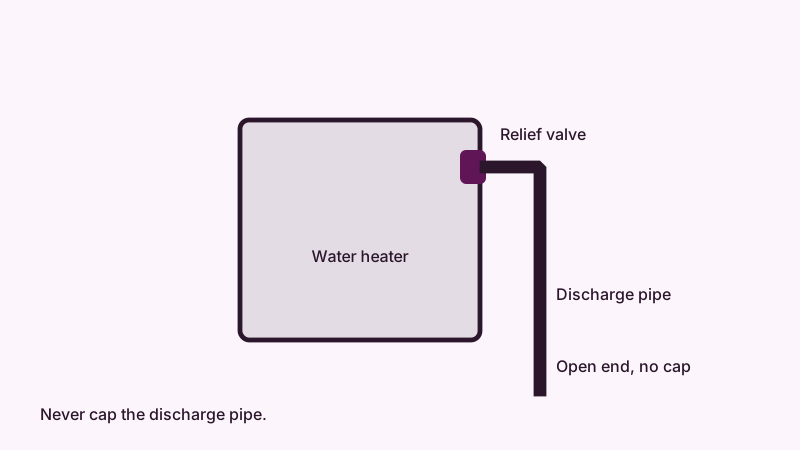
Change the valve if it weeps all the time, if lifting its lever gives only a dribble, or if the brass is furred with scale or rust. Nobody should nurse this fitting along, because a seat that sticks shut leaves a hot, pressurized tank with no way out. Some careful owners do the swap themselves. Even so, three details count for as much as the valve itself: its rating, the pipe attached to it and whatever made it drip in the first place. If the heater is leaking elsewhere too, begin at water heater repair in Torrance, then come back here.
How can I tell the relief valve has failed?
Four signs: it drips with no lever touched, the lever lifts and nothing gushes, the valve refuses to close fully afterward, or the body wears a crust of mineral or green corrosion. Any one is enough. Many installers also change the valve whenever the tank itself is replaced, since pairing a new heater with a decade-old safety fitting makes little sense.
Its formal name, temperature and pressure relief valve, gets shortened to T&P. The fitting is a brass valve near the top or shoulder of the tank, fitted with a short lever and a pipe that runs down toward the floor. Manufacturers generally advise lifting the lever for a few seconds once a year: water should rush into the drain pipe and stop when released. An old valve can fail that test and keep leaking, so keep the replacement and a towel ready before you try.
The valve drips. Is the valve the problem?
Not always. Frequently the tank is being pushed past what the valve tolerates, so the valve is simply doing what it was built for. Two usual causes are expansion of heated water in a closed plumbing system, and street pressure running above about 80 psi. Put in a new valve without curing either cause and the weeping returns.
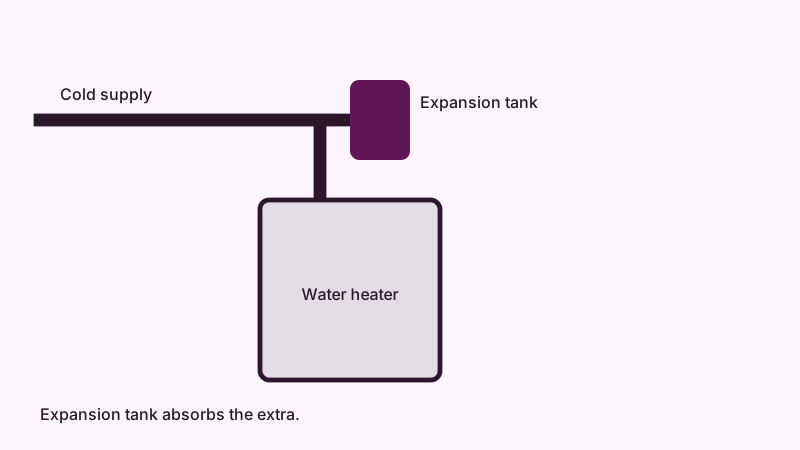
How the drip pattern points to the cause:
- Drips mainly after the burner or element has been running: thermal expansion. A compact expansion tank teed into the cold supply usually settles it.
- Drips all day on a heater set to a normal temperature: high supply pressure. A gauge screwed to a hose bib will show it, and anything much past 80 psi suggests a regulator. See adjusting a pressure regulator and regulator installation cost.
- Scalding water from the pipe: the tank is overheating. Turn the thermostat down, cut the gas or power and call a plumber.
Wet somewhere other than the valve? Other leak sources are in repairing water heater leakage and the water heater leak service page.
Which specifications must the new valve match?
Four: pressure rating, temperature rating, heat input rating and thread size. A typical valve opens at 150 psi, or the tank's own working pressure if lower, and at 210 degrees Fahrenheit. Its BTU-per-hour capacity has to equal or exceed the heater's input, printed on the rating label fixed to the tank.
Probe length counts too, since the sensing tip has to sit in the tank water. Buy a valve listed for water heaters, never a generic pressure fitting. If the plate has faded, photograph whatever is readable and let the plumber choose.
What does a replacement actually involve?
In order: stop the fuel or electricity, shut the cold inlet, open a hot tap to drop the pressure and draw off a few gallons so the water level falls beneath the valve. Take off the discharge pipe, unscrew the old valve, dress the new threads with tape or compound, tighten it with the outlet facing down and refit the pipe. Reopen the cold inlet, let air escape through a hot tap and restore the heat.
Rules outrank the sequence. Never cap, plug or shrink the outlet. Never run the discharge pipe uphill or fit a shutoff in it. Stand clear of the outlet during a test, since the water coming out may scald. Discharge piping is normally metal or another approved material, runs to a safe drain or outside and stops a short distance above its termination. Details differ between cities. When unsure, phone Torrance Building and Safety, or the building office in whichever South Bay city you live in.
Is this a permit job, or a plumber's job?
Replacing a water heater in California takes a permit, and an inspection of the valve, the discharge pipe and the earthquake straps comes with it. A valve-only swap may or may not need one, depending on the city, which the building division can confirm. Gas connections are contractor work.
On an electric tank many careful owners manage the valve safely. A gas tank puts the valve near the flue, where a slip can scald, which tips the choice toward a plumber. A visit also looks for the cause of the drip, reads the pressure and inspects the anode rod, whose failure is a frequent reason an older tank gives up in the same season. Related reading: anode rod replacement and water heater permits.
Should I replace the whole heater instead?
Once a tank is somewhere between ten and fifteen years old, a failed valve often hints that retirement is near. Valves foul and steel rusts on similar timelines, so spending once on a new heater may be wiser. A tank leaking from its seams is finished regardless of the valve.
On age, how often a water heater needs replacing. With a new unit, ask the plumber to include a fresh valve and discharge pipe in the job and to show you the test lever before leaving.
Common questions
Do I turn the heater off if the valve is leaking?
Yes, first of all. Stop the gas or electricity, close the cold inlet and open one hot tap. Do not cap the valve. If steam or very hot water is blowing from the pipe, leave the room and call a plumber, and use 911 for anyone at risk.
Why does the drip come only in the morning?
Overnight the heater recovers, the water expands and pressure in a closed system climbs. That suggests the system needs an expansion vessel or a regulator. A drip that began right after you lifted the lever may only need a few more seconds of flow to wash out grit.
How long will the swap take?
For a plumber, a valve on a tank that drains cleanly is generally under an hour, with the supply off for part of it. A pressure cause adds an expansion tank or regulator and more time. Time and price arrive in the written quote once the unit has been seen.
How frequently should I test the valve?
Once a year is the usual manufacturer advice. Test with the drain pipe clear and nobody near the outlet. Where the water is hard, scale can lock the seat, and some installers renew the valve every few years. One that has gone ten years untested may fail its first test.
What goes in the written quote?
Ask for the valve's rating, whether a pressure test and an expansion tank check are included, the state of the discharge pipe and whether a permit applies. Ask who pays for what if the tank proves to leak at its seams, since that changes the whole job.
The rest of our guides start from Del Amo Plumbing plumber.
Sources used
- Published installer and manufacturer guidance on temperature and pressure relief valves, including annual lever testing, 150 psi and 210 degree ratings and BTU matching, read November 2026 (plain label)
- California Plumbing Code, water heater relief valve and discharge provisions, to be confirmed with the Torrance Building and Safety Division for any permitted job
Last updated