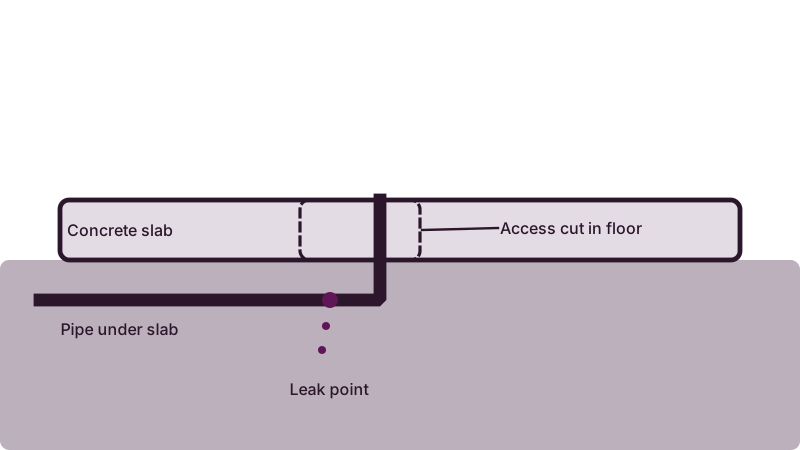
A standard homeowners policy covers "sudden and accidental" water damage, and it generally does not cover damage from seepage, slow leaks, or wear and tear. For a pipe that broke under your slab, that often splits the claim in two: some policies pay for the water damage inside the home, while the cost of the failed pipe itself is commonly your own. Exact terms differ by policy, so this page is a guide, not insurance advice. For more on leaks of all kinds, see our Del Amo Plumbing home page and the leak plumber guide.
Will my policy pay for a broken pipe under the slab?
It depends on the wording, but the usual pattern is this. In the California Department of Insurance's residential guide, "sudden and accidental water damage" appears among typically covered perils, while "water damage caused by seepage or leaks" and "wear and tear or maintenance" sit on its list of generally excluded perils. A pipe that splits suddenly and floods a room belongs to the first group. A pipe that has been pinholing for months fits the second.
What is paid for varies. Certain policies pay to break the slab open and reach the pipe (tear-out or access coverage), then restore the flooring and walls. Others cover only the resulting damage and leave both the pipe and the access cost with you. Look for the words "tear out" and "access" in your policy, and for any endorsement about water or sewer.
Because a slab leak is hidden, deciding when it began is the hard part. Keep the plumber's written findings and any leak detection report.
What does "sudden and accidental" mean for a slab leak?
It means a break that happened at a point in time and caused damage you did not expect, as opposed to a problem that built up over weeks. A flood from a split pipe is sudden. A damp spot that grows for months from a pinhole is gradual. Adjusters ask which one you have, and the answer drives the claim.
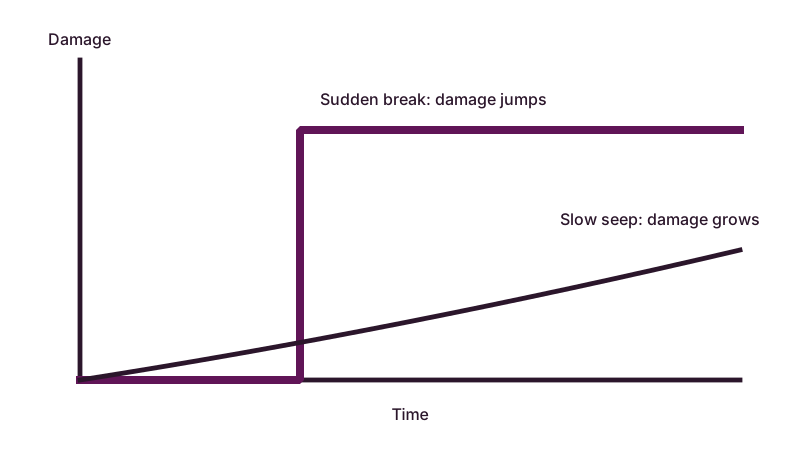
A slab leak straddles the two: corrosion is slow, yet the failure itself can be abrupt. The evidence matters: water bills before and after, the meter test, photos, and the plumber's report showing the failure point and its condition. The EPA's meter test is simple: close every tap, record the meter, check it again after two hours, and treat any change as a sign of a leak.
How leaks are located, and the repair choices that follow, appear in slab leak repair versus repipe.
What is usually excluded?
Wear and tear, deterioration and neglect are standard exclusions. So is damage that builds up from long-term seepage, and mold in many policies. The Department of Insurance's guide tells readers to study the contract's exclusions, and it names earth movement and ordinary wear among the usual ones.
Several things the policy may not pay for:
- The pipe itself, if it failed from age or corrosion
- Gradual leaks the insurer decides you should have noticed
- Damage after you failed to take reasonable steps to stop the water
- Sewer or drain backup, which often needs an added endorsement
A home warranty is a different product. The Department explains the difference: a warranty repairs or replaces home systems that wear out, whereas insurance pays for the damaged wall and floor.
What are the first steps once I suspect a slab leak?
Close the main valve to stop further damage, then tell the insurer quickly, since policies expect prompt notice. Take photos and videos of everything. Keep any wet materials the adjuster may need to see, and write down when you first noticed the problem.
Then get a plumber to locate the leak. A detection visit often costs a few hundred dollars; see what detection costs. Request a written report naming the cause, the spot and the state of the pipe. Keep receipts for repairs and temporary living costs, because the Department advises keeping receipts for additional living expenses.
Hold off on permanent repairs until the insurer can inspect, unless a quick fix is needed to stop the water. Ask the adjuster in writing what is allowed first.
How much does the repair cost if insurance does not pay?
Slab leak prices swing widely with access and scope: a spot repair, a reroute and a full repipe are three different bills, and the pipe repair is the part an insurer most often leaves to the homeowner. Ranges are in slab leak repair costs, and slab leak repair companies describes the trade.
If the pipe is giving way at multiple points, expect the plumber to propose a reroute or repipe over repeated slab repairs. Those options compare differently against what an insurer might pay, so get a quote for each and share them with the adjuster.
What if my claim is denied?
Ask for the denial in writing, with the policy wording that applies. Review the exclusion they cite and compare it with your plumber's report. You can ask the insurer to reconsider with new evidence, such as a report showing the failure was sudden. Consumer complaints go to the California Department of Insurance, which also publishes claims guidance.
A denial for the pipe repair is common even when the water damage is paid, so a split outcome is not a sign you did something wrong. Get the repair quote from a plumber, and our quote form is there if you would like a local one to take a look. For pipes above the slab, see insurance and a burst pipe.
Common questions
Will my insurer pay for a slab leak?
The resulting water damage is often covered when the leak was sudden and accidental, while the pipe repair itself frequently is not. Some policies pay for access through the slab. Others pay nothing for a leak the insurer says built up over time. Policy wording and the cause of failure decide it, so read yours or ask the insurer.
Is a pipe under a foundation my responsibility?
Typically yes, provided it sits downstream of the meter and serves your house. The line from the meter to the house usually belongs to the owner, and the plumbing under the slab is part of the house. The utility usually owns the main to the meter. Confirm with Torrance Municipal Water before digging or paying.
How can I prove a leak was sudden?
Keep the evidence together: dated photos, water bills, a meter test log, and the plumber's written report naming where the leak is and pipe condition. A sharp spike in the bill or a plumber's finding of a fresh break helps. A history of slow bills over months can hurt, so do not ignore a high bill.
Should I fix the leak before the adjuster comes?
Stop the water, then wait on permanent repairs until the insurer has inspected, if that is possible. Photograph everything first and save the broken section of pipe. Ask the adjuster what is acceptable. An unreasonable delay in stopping the water can also hurt a claim.
Sources used
- California Department of Insurance, residential insurance guide
- EPA WaterSense, Fix a Leak Week (meter test)
- Published slab leak repair cost guides (Fixr, Bob Vila), checked November 2026
Last updated